AI Search Optimisation Readiness Statistics: UK 2026


Send to your email
Enter your email below and a link to download the PDF of this article will be sent directly to your inbox.

AI search optimisation readiness is becoming harder to separate from wider marketing performance as buyer discovery moves beyond traditional search results. Measuring readiness gives leaders a clearer view of whether their organisation can protect or enhance its visibility, earn citations and keep pace as AI-led search develops. Brands now need the capability, structure and confidence to compete wherever buyers are asking questions and making decisions.
To find out what 85,685 opinions of B2B marketing revenue leaders in the UK were about AI search optimisation readiness, we utilised AI-driven audience profiling to synthesise insights from online discussions over 12 months, ending on the 7th of July 2026, to a high statistical confidence level. These statistics show where readiness is gaining ground, where organisations are still finding their footing and which gaps remain as AI search becomes a more established part of marketing strategy.
Index
- Methodology and data
- 63% of B2B marketing revenue leaders’ competitors agree that it’s somewhat true that their competitors don’t outrank them in AI answers, but 33% say this isn’t really true, 2% are not sure if they’re outranked, and a further 2% say that it’s somewhat true that they’re significantly outranked in AI answers
- Running a formal AI search training program is absolutely essential for 28% of B2B marketing revenue leaders, and a further 28% cite real-time training as absolutely essential, too; in contrast, 45% offer staff no training on AI search
- 4% of B2B marketing revenue leaders regularly use AI for reporting, as it’s absolutely essential, 26% agree it’s somewhat important for regular reporting use, but for 10%, it’s not a main factor, 3% absolutely use it AI for reporting occasionally, and 25% find it somewhat important on an occasional basis; a further 1% find it absolutely core to reporting but 3% don’t use it for this purpose at all, while 28% don’t use AI in this capacity at all
- 72% of B2B marketing revenue leaders are somewhat confident that their brand appears in AI-generated answers, but 28% are not confident that they appear in these answers
- 98% of B2B marketing revenue leaders currently measure AI search optimisation readiness success in website traffic only, 1% use a combination of metrics, 1% look to pipeline it revenue attribution as a measurement, and 1% don’t measure this success yet
- In the last year, AI search has been responsible for significant restructuring for36% of B2B marketing revenue leaders’ organic search strategies, and 2% have made minor adjustments; however, for 32%, it’s too early to say if there have been any changes, and 30% have made no changes
- 59% of B2B marketing revenue leaders audit their AI search optimisation readiness quarterly, 21% do so monthly, and 21% run audits on an ad hoc basis
- 30% of B2B marketing revenue leaders rate their organisation’s overall AI search optimisation readiness as developing its capabilities, and 29% are in an early exploration phase, meanwhile, 17% have fully embedded AI search optimisation, and 17% are well advanced, but 6% have not yet started
- In 2026, AI search readiness is absolutely essential and a top priority for 27% of B2B marketing revenue leaders; it’s also a major priority and absolutely essential for 15%, yet, for 59%, AI search readiness is a minor priority, as it’s not a main focus
- Google AI overviews are a top concern for 20% of B2B marketing revenue leaders in their visibility strategy; this AI search platform causes some concern for 43%, and is a minor concern for 4%, but 1% are not concerned with it, while 13% name ChatGPT as their top concern, 16% say it poses some concern for their visibility strategy, and it’s a minor concern for 3%, while no one voices concerns about visibility in Perplexity and Microsoft Copilot
- For 17% of B2B marketing revenue leaders, AI is absolutely core to their marketing function, and 8% agree this somewhat describes their current use of AI across marketing functions, but it’s not really applicable for 9%, and it doesn't describe 2% at all, 17%’s use of AI in marketing functions can be described as AI being embedded across most functions, but this is less applicable for 16%, while 12% are absolutely using AI in specific functions, and this somewhat describes the use for 5%, 12% are experimenting with AI tools, but 1% aren’t, and 2% agree that no AI use does not describe their business
- For 17% of B2B marketing revenue leaders, AI is absolutely core to their marketing function, and 8% agree this somewhat describes their current use of AI across marketing functions, but it’s not really applicable for 9%, and it doesn't describe 2% at all, 17%’s use of AI in marketing functions can be described as AI being embedded across most functions, but this is less applicable for 16%, while 12% are absolutely using AI in specific functions, and this somewhat describes the use for 5%, 12% are experimenting with AI tools, but 1% aren’t, and 2% agree that no AI use does not describe their business
- A cross-functional group is clearly responsible for AI search optimisation readiness within 39% of B2B marketing revenue leaders in their organisations, and 40% say this is likely where the responsibility lies, while a dedicated AI or innovation team is likely the owner for 21%
- The state of AI search optimisation readiness
Methodology and data
Sourced using Artios from an independent sample of 85,685 opinions of B2B marketing revenue leaders in the UK across X, Quora, Reddit, Bluesky, TikTok and Threads. Responses are collected within a 95% confidence interval and 5% margin of error. Results are derived from what people describe online, from opinions expressed, not actual questions answered by people in the sample.
Do competitors outrank B2B marketing revenue leaders in AI answers?
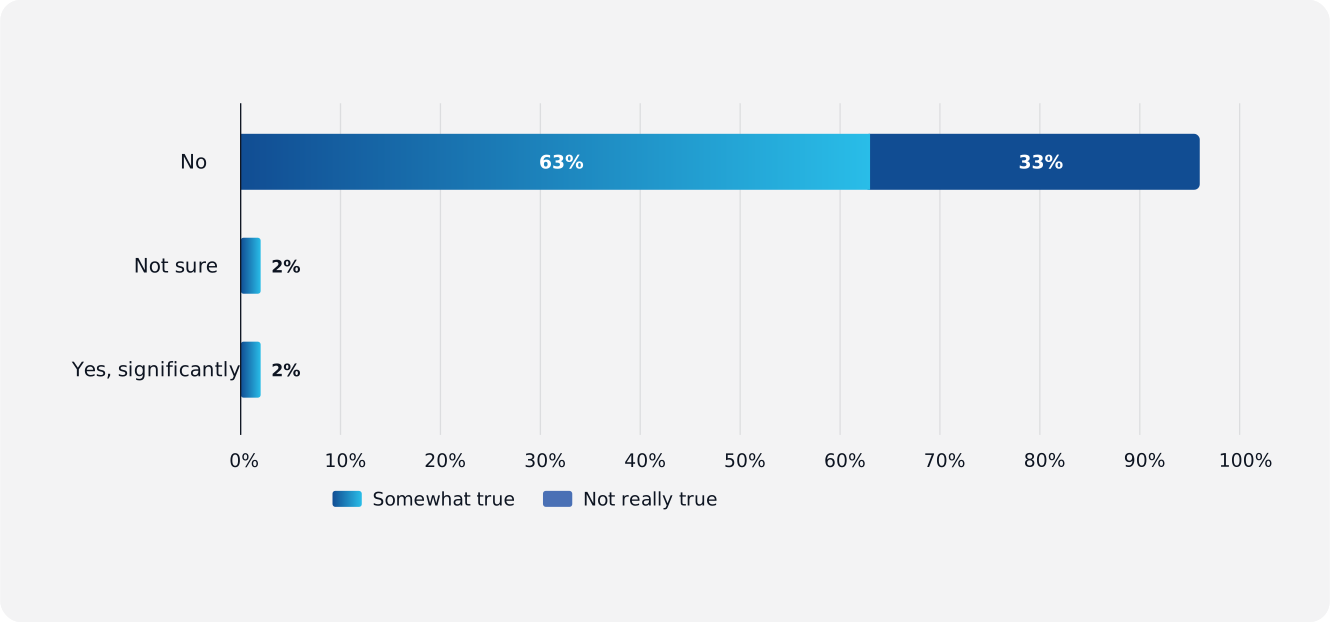
63% of B2B marketing revenue leaders’ competitors agree that it’s somewhat true that their competitors don’t outrank them in AI answers, but 33% say this isn’t really true, 2% are not sure if they’re outranked, and a further 2% say that it’s somewhat true that they’re significantly outranked in AI answers
Outranking remains an issue:
AI is rapidly changing how people search and discover brands and information online. For B2B businesses, this means visibility now extends beyond traditional search rankings. Organisations that optimise for AI search are better positioned to be cited, recommended, and surfaced when buyers use AI tools to research products, services, and potential partners.
Among our audience of B2B marketing revenue leaders, 63% believe that it's somewhat true that their competitors do not outrank them in AI-generated answers, and 33% think this isn’t really true. On the flip side, just 2% are not sure if their competitors outrank them in AI answers, and 2% say that it’s somewhat true that they are significantly outranked.
The weighting of these views indicates that AI search optimisation is becoming a key competitive differentiator. It also reinforces that monitoring competitors' visibility in AI-generated answers is becoming just as important as tracking traditional search rankings.
Do B2B marketing revenue leaders train staff on AI search?
Running a formal AI search training program is absolutely essential for 28% of B2B marketing revenue leaders, and a further 28% cite real-time training as absolutely essential, too; in contrast, 45% offer staff no training on AI search
Some teams are building AI capability while others are standing still:
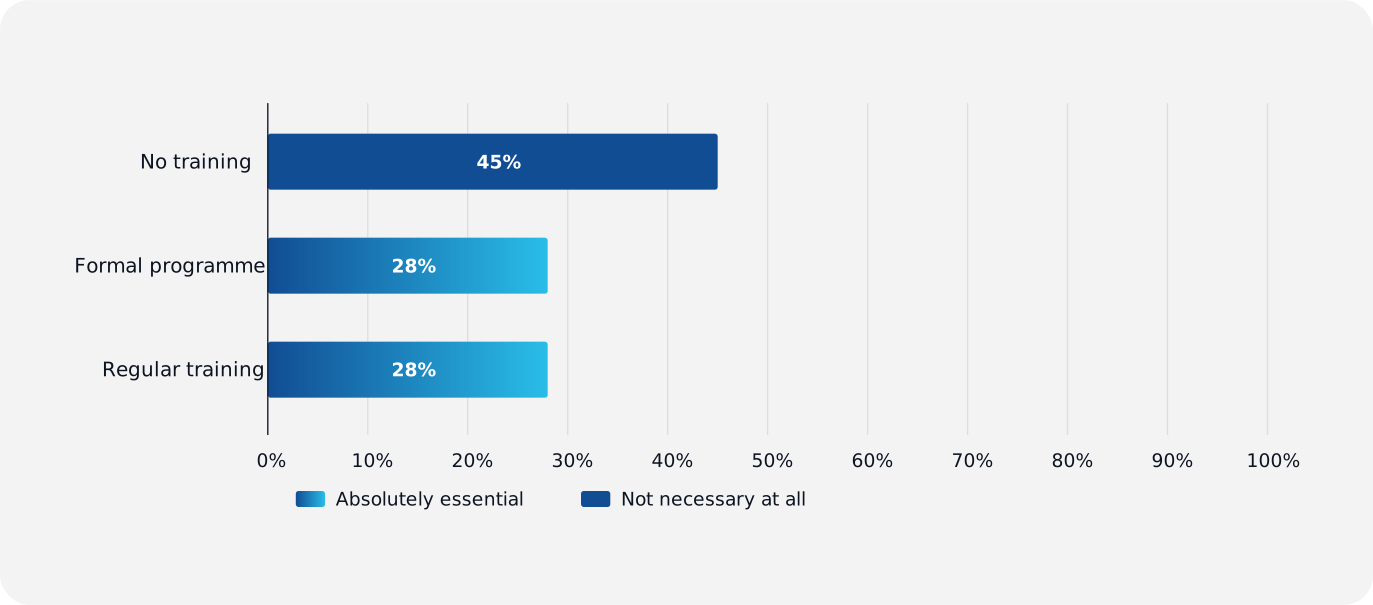
Staff training on AI remains uneven among B2B marketing revenue leaders. 45% provide no training and consider it not necessary at all. This group isn’t simply behind on delivery. Its leaders remain unconvinced that employees need structured support to use AI effectively.
The wider UK picture points to the same lack of broad AI training activity. According to a recent UK government survey, only 11% of employers had staff undertake AI training in the previous 12 months. Without a shared programme, teams lack consistent standards for approved tools, data handling, output review and the responsible use of AI-generated information.
At the other end of the scale, 20% have run a formal programme and regard it as absolutely essential. Formal training can establish a shared level of knowledge across teams and connect AI use to business priorities.
A further 28% provide regular training and consider it absolutely essential. Their approach recognises that AI capabilities, tools and working practices continue to develop, requiring skills to be updated rather than taught once.
Do B2B marketing revenue leaders use AI for reporting?
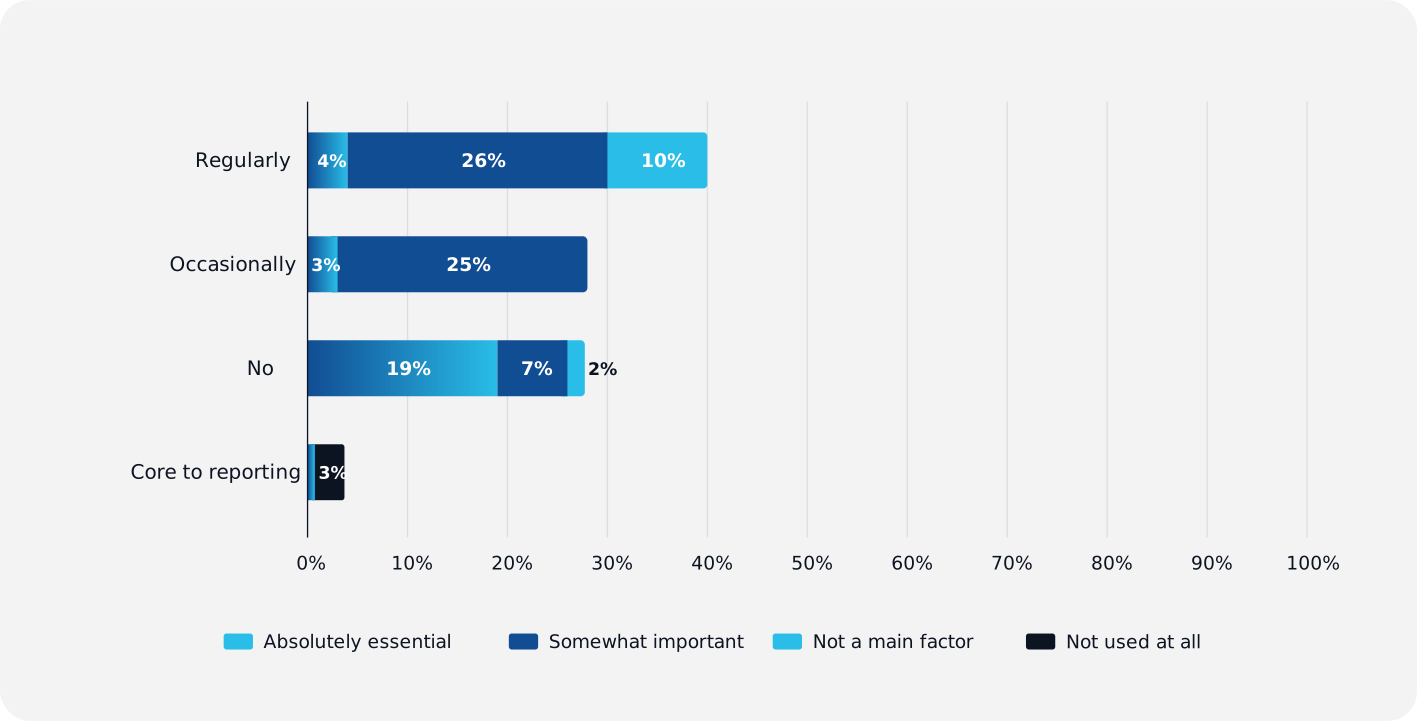
4% of B2B marketing revenue leaders regularly use AI for reporting, as it’s absolutely essential, 26% agree it’s somewhat important for regular reporting use, but for 10%, it’s not a main factor, 3% absolutely use it AI for reporting occasionally, and 25% find it somewhat important on an occasional basis; a further 1% find it absolutely core to reporting but 3% don’t use it for this purpose at all, while 28% don’t use AI in this capacity at all
AI reporting is finding its place:
B2B marketing revenue leaders have started using AI for reporting, but its role still varies widely. AI was already embedded across UK marketing by early 2023, with 94% of senior brand marketers using it in digital advertising and 87% considering it an important part of their marketing strategy. Reporting has yet to reach the same level of consistent adoption.
4% of our audience use AI regularly and consider it absolutely essential, while 26% rate regular use as somewhat important and 10% don’t see it as a main factor. These leaders can use AI to speed up analysis, identify performance changes and summarise complex results.
3% use AI occasionally and regard it as absolutely essential, while 25% consider occasional use somewhat important. Selective use allows teams to apply AI to specific reports or time-consuming tasks without integrating it into every reporting process.
Among leaders who don’t currently use AI for reporting, 19% still consider it absolutely essential, 7% rate it as somewhat important and 2% don’t see it as a main factor, showing that recognised value is running ahead of implementation.
Only 1% say AI is core to reporting and absolutely essential. At this level, AI becomes part of how teams collect, interpret and communicate performance information rather than an occasional reporting aid. A further 3% recognise this central role despite not using AI at all.
How confident are B2B marketing revenue leaders that their brand appears in AI-generated answers?
72% of B2B marketing revenue leaders are somewhat confident that their brand appears in AI-generated answers, but 28% are not confident that they appear in these answers
AI answers are leaving leaders guessing:
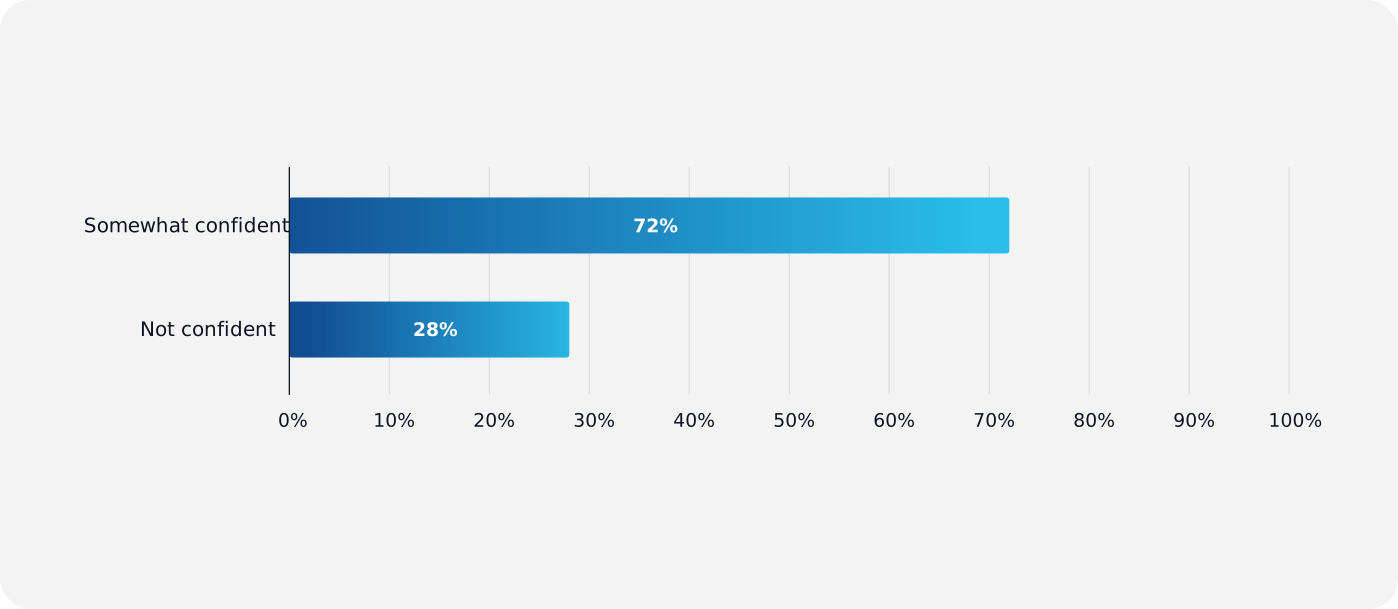
Confidence in appearing in AI-generated answers remains limited among B2B marketing revenue leaders. 72% is somewhat confident that their brand appears, which points to evidence of brand references, traffic from AI tools or content citations, but not enough consistency to establish dependable visibility. Irregular results make it difficult to know whether the brand appears across different questions, platforms and stages of the buyer journey.
The remaining 28% aren’t confident that their brand appears in AI-generated answers. Their lack of confidence points to weak authority signals, limited third-party mentions or content that gives AI systems few clear reasons to cite the brand. It also indicates that some teams lack the tools or processes needed to measure AI visibility reliably.
How do B2B marketing revenue leaders measure AI search optimisation readiness success?
98% of B2B marketing revenue leaders currently measure AI search optimisation readiness success in website traffic only, 1% use a combination of metrics, 1% look to pipeline it revenue attribution as a measurement, and 1% don’t measure this success yet
Commercial impact is missing from the scorecard:
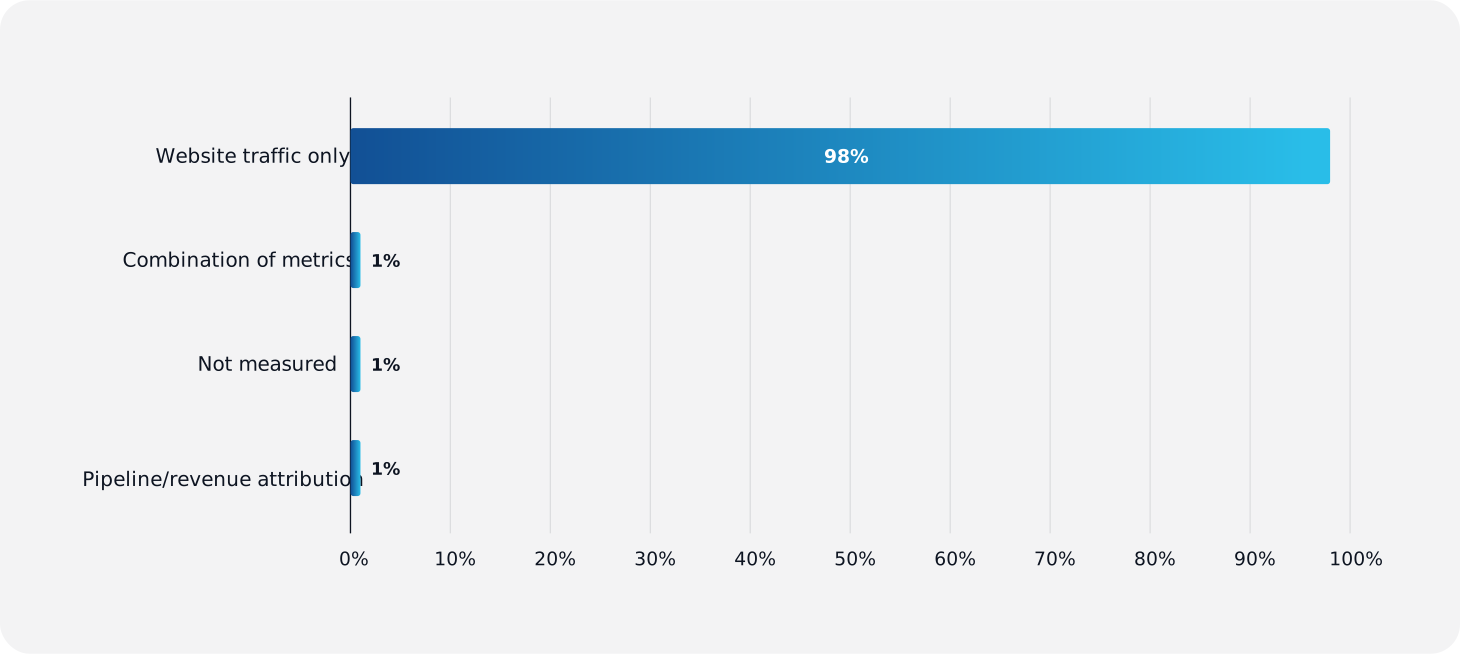
B2B marketing revenue leaders currently measure AI search optimisation readiness success through a very narrow set of indicators. This lines up with McKinsey’s finding that only 16% of brands systematically track AI search performance.
98% of our audience relies on website traffic alone. Traffic is familiar and easy to access, but it only records the people who click through from an AI platform. It misses brand mentions, citations, visibility across relevant prompts, and the times an AI-generated answer influences research without sending someone to the website. Relying on traffic alone leaves leaders with only part of the picture.
The AI search metrics that many organisations still overlook
Only 1% use a combination of metrics. Looking at traffic alongside citations, prompt visibility, share of voice, and engagement gives teams a broader view of whether their work is improving their presence in AI answers.
Another 1% don’t measure success at all. Without any tracking in place, they have no clear way to judge whether their activity is working or where more attention is needed.
Pipeline or revenue attribution is also used by just 1%. Linking AI search activity to leads, opportunities and revenue brings measurement closer to business impact, but it requires stronger analytics and a clearer view of the buyer journey.
How has AI search changed B2B marketing revenue leaders’ organic search strategy this year?
In the last year, AI search has been responsible for significant restructuring for36% of B2B marketing revenue leaders’ organic search strategies, and 2% have made minor adjustments; however, for 32%, it’s too early to say if there have been any changes, and 30% have made no changes
AI search is forcing some leaders back to the drawing board:
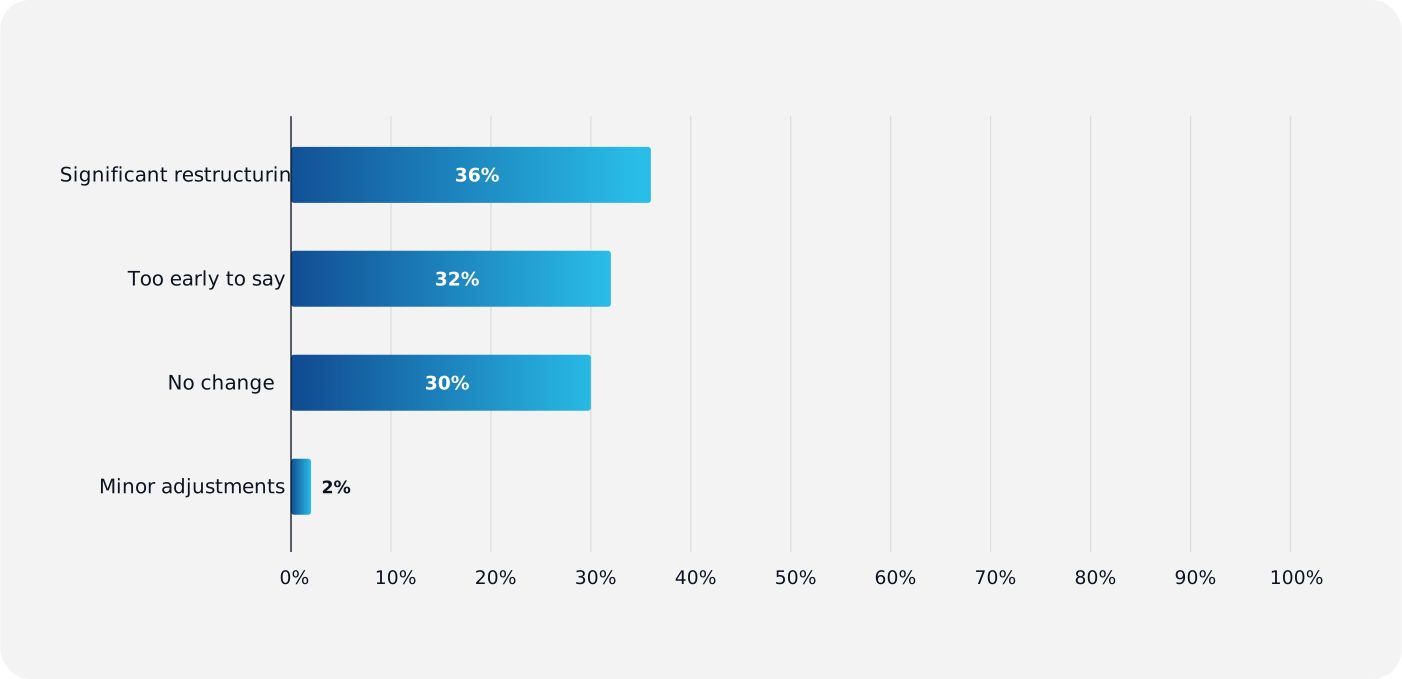
AI search has changed the organic search strategies of B2B marketing revenue leaders this year to varying degrees.
36% have significantly restructured their organic search strategy. These leaders are moving beyond traditional rankings and clicks to consider how content is understood, cited and recommended by AI platforms. Their restructuring likely centres on stronger authority signals, clearer topic coverage, better source credibility and closer attention to the questions buyers ask.
Another 32% feel it’s too early to say. They are still testing tools, monitoring visibility or waiting for clearer evidence before committing budget and resources. This caution gives teams time to learn, but it also risks leaving them behind competitors that are already adapting.
30% have made no change. Their current strategy is either still delivering results, or AI search hasn’t yet created enough urgency to justify a different approach.
Only 2% have made minor adjustments. Small changes allow teams to test new methods without disrupting established activity, but limited action is unlikely to produce a clear advantage as AI search becomes more influential.
How often do B2B marketing revenue leaders audit AI search optimisation readiness?
59% of B2B marketing revenue leaders audit their AI search optimisation readiness quarterly, 21% do so monthly, and 21% run audits on an ad hoc basis
AI readiness needs more than a one-off health check:
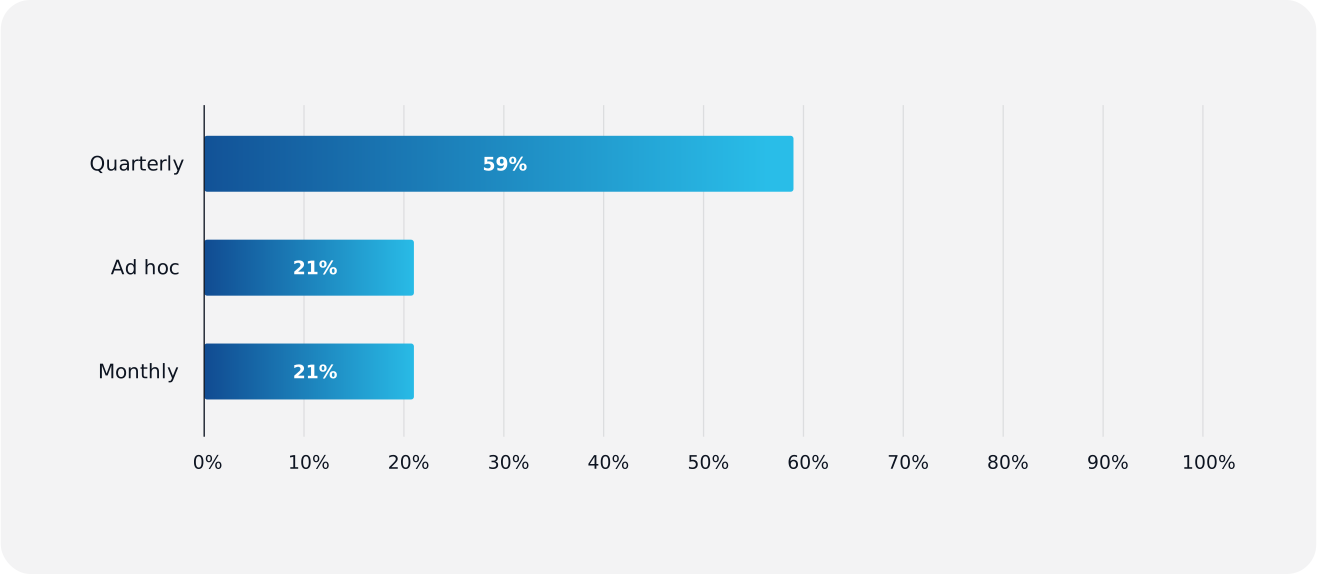
How often B2B marketing revenue leaders audit AI search optimisation readiness determines how quickly they can identify changes in visibility, citations and competitor presence. 59% carry out audits quarterly. This gives teams a regular point to review brand visibility, citations, competitor presence and changes across AI platforms without turning measurement into a constant task.
Another 21% audit readiness on an ad hoc basis. These reviews are more likely to happen after a traffic change, competitor movement, platform update or shift in campaign priorities. Ad hoc auditing gives teams flexibility, but it also creates the risk that problems go unnoticed until they begin affecting performance.
The remaining 21% run monthly audits. More frequent checks give leaders a closer view of how quickly AI search visibility changes and allow teams to act sooner when citations, rankings or brand mentions move.
How do B2B marketing revenue leaders assess their organisation’s overall AI search optimisation readiness today?
30% of B2B marketing revenue leaders rate their organisation’s overall AI search optimisation readiness as developing its capabilities, and 29% are in an early exploration phase, meanwhile, 17% have fully embedded AI search optimisation, and 17% are well advanced, but 6% have not yet started
Some leaders are building AI search in, while others are still sizing it up:
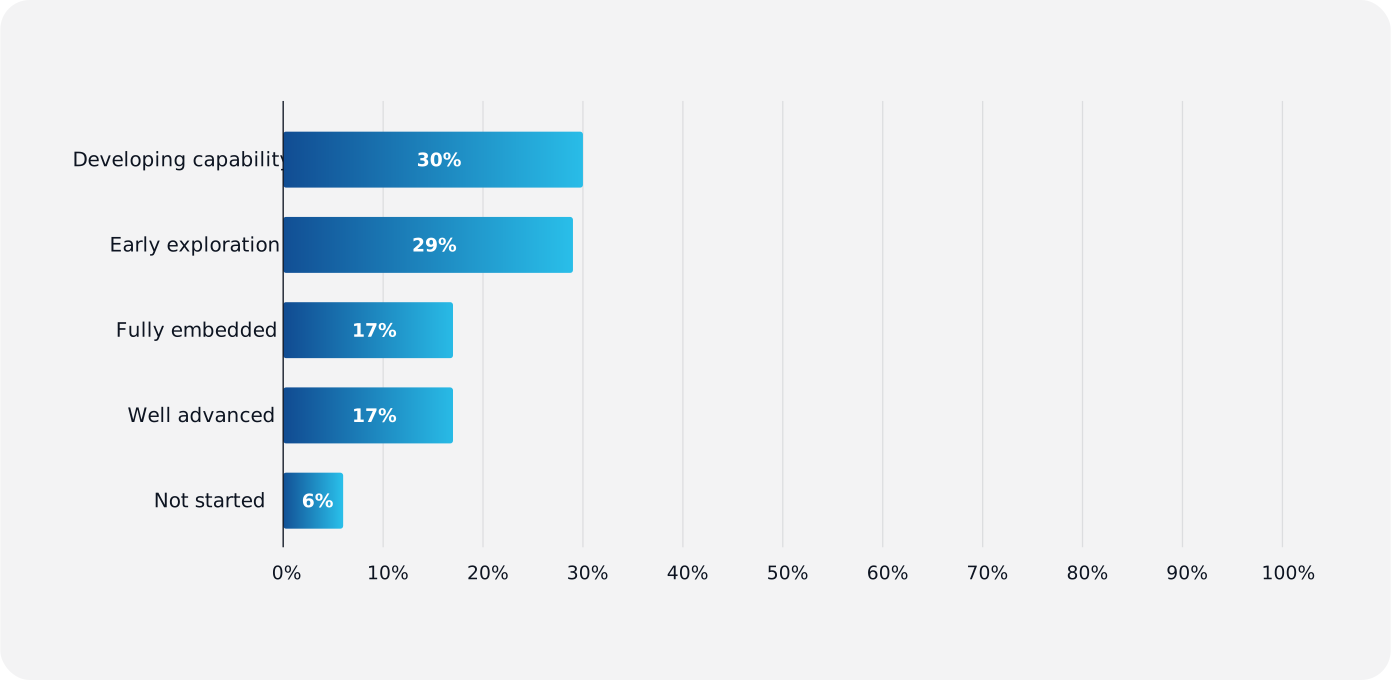
B2B marketing revenue leaders rate their organisation’s overall AI search optimisation readiness across a broad range of maturity levels. 30% are developing capacity. These organisations have moved beyond awareness, but their progress is still being built piece by piece. Skills, ownership, tools and measurement are likely to develop at different speeds, making it difficult to turn early investment into a consistent organisation-wide approach.
Another 29% remain in early exploration. They are testing what AI search means for content, visibility and measurement before committing to a wider programme. Progress at this stage depends on turning early learning into clear ownership and practical action.
From early adoption to full integration
17% rate their organisation as well advanced, while AI search optimisation is fully embedded for a further 17%. These leaders have moved beyond testing and are building AI search into established strategy, skills and processes. Their position fits with recent UK government research, which found that 54% of organisations already using AI feel ready to scale it, including 13% that feel completely ready and 41% that feel fairly ready.
The remaining 6% haven’t started. AI search has yet to enter their planning, leaving them without the capability or structure needed to compete for visibility as buyer behaviour changes.
Is AI search readiness a priority for B2B marketing revenue leaders?
In 2026, AI search readiness is absolutely essential and a top priority for 27% of B2B marketing revenue leaders; it’s also a major priority and absolutely essential for 15%, yet, for 59%, AI search readiness is a minor priority, as it’s not a main focus
AI search is rising faster than its place on the agenda:
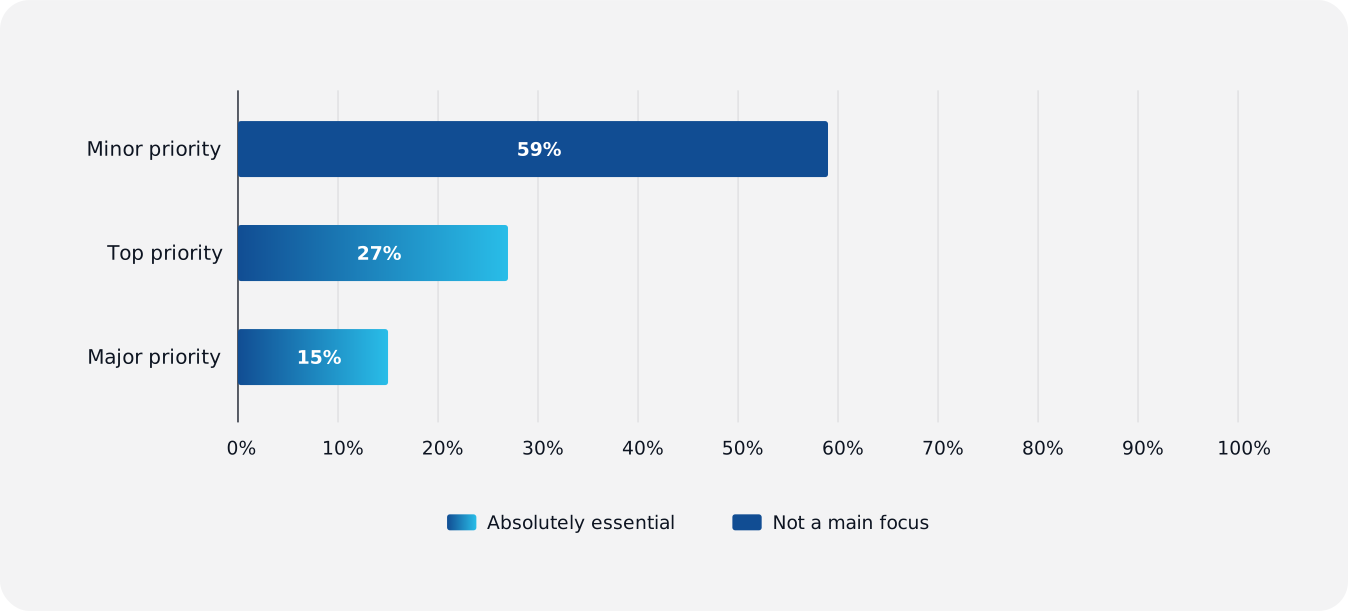
AI search readiness sits at very different levels of importance for B2B marketing revenue leaders as they set their priorities for 2026.
59% of our audience treats it as a minor priority and not a main focus. This group may be underestimating how quickly the conditions around online visibility are changing. The State of European Business 2026 report warns that rising competition, higher advertising costs and changing algorithms are creating new barriers to visibility. Nearly one in three UK businesses already find it harder to reach customers online, while 37% of small UK businesses feel unprepared for AI-driven change.
Leaving readiness in the background gives teams less time to understand how their brand appears in AI answers, strengthen content for citation and build the skills and measurement needed to act.
A more committed group takes a different view. 27% rate AI search readiness as an absolutely essential top priority, while 15% see it as a major priority and absolutely essential. These leaders recognise that AI search is changing how buyers discover, compare and assess brands. Making readiness a serious priority gives organisations time to adapt their content, reporting, and organic search strategy before weaker visibility begins to affect reach and revenue.
Which AI search platforms concern B2B marketing revenue leaders’ visibility strategy?
Google AI overviews are a top concern for 20% of B2B marketing revenue leaders in their visibility strategy; this AI search platform causes some concern for 43%, and is a minor concern for 4%, but 1% are not concerned with it, while 13% name ChatGPT as their top concern, 16% say it poses some concern for their visibility strategy, and it’s a minor concern for 3%, while no one voices concerns about visibility in Perplexity and Microsoft Copilot
AI search has opened new fronts on the visibility battleground:
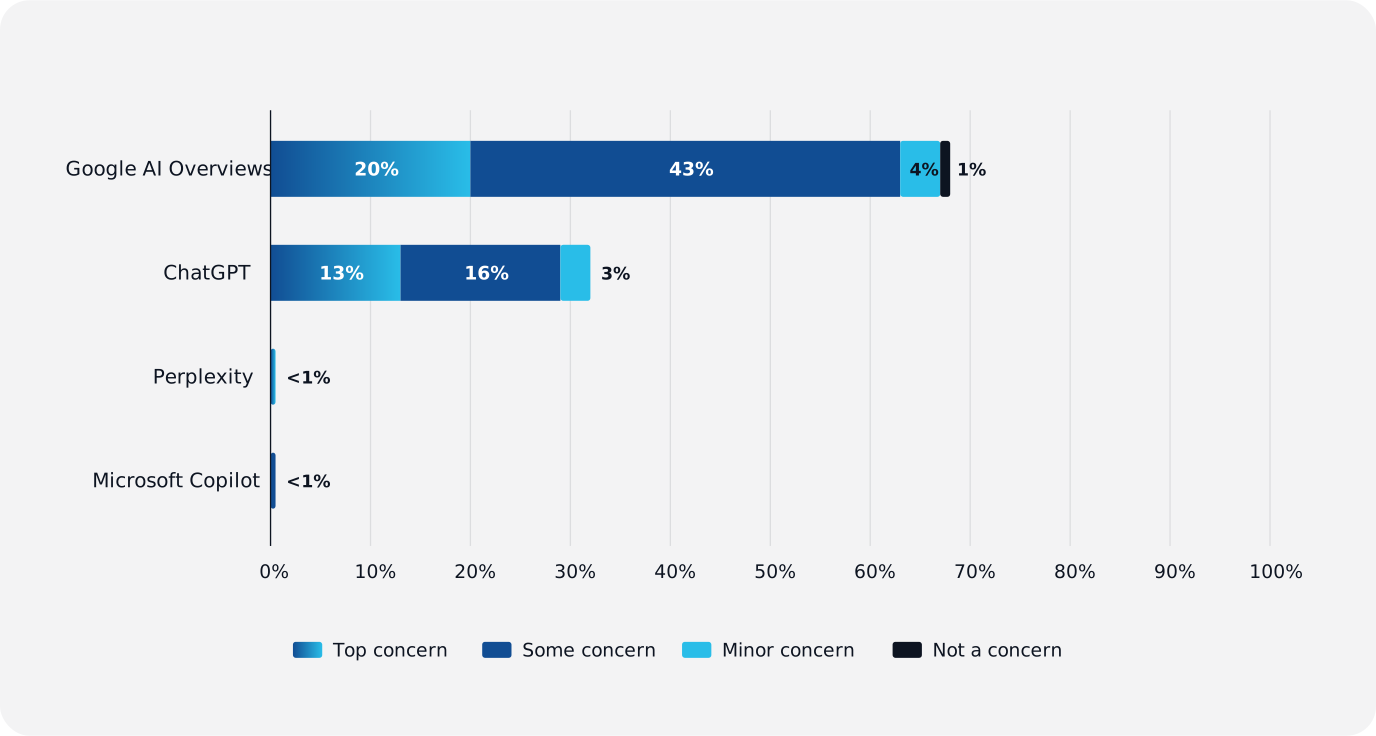
The AI search platforms causing the most concern among B2B marketing revenue leaders are those with the greatest potential to influence everyday discovery and brand visibility.
Google AI Overviews dominate, with 20% rating them as a top concern, and 43% having some concern. Only 4% see them as a minor concern, and only 1% aren’t concerned. With AI Overviews now available in more than 200 countries and territories and over 40 languages, their reach puts AI-generated summaries directly into familiar search journeys, where they can answer a question before the user visits a website. Leaders need to understand whether their brand is cited, omitted or displaced by competitors inside Google’s own results.
ChatGPT is a top concern for 13%, some concern for 15% and a minor concern for 3%. Its role in research, comparison and recommendation means brands need to appear in answers that influence how buyers understand a market before they reach a company website.
Perplexity and Copilot barely register
Perplexity is a top concern for less than 1%. Its citation-led format gives users direct access to the sources behind each answer, making authority, relevance and third-party coverage especially important for brands that want to be referenced.
Microsoft Copilot causes some concern for less than 1%. Its integration into Microsoft tools creates a different visibility challenge, as buyers can encounter AI-generated information while searching, working or researching inside platforms they already use.
Which best describes B2B marketing revenue leaders’ use of AI across marketing functions?
For 17% of B2B marketing revenue leaders, AI is absolutely core to their marketing function, and 8% agree this somewhat describes their current use of AI across marketing functions, but it’s not really applicable for 9%, and it doesn't describe 2% at all, 17%’s use of AI in marketing functions can be described as AI being embedded across most functions, but this is less applicable for 16%, while 12% are absolutely using AI in specific functions, and this somewhat describes the use for 5%, 12% are experimenting with AI tools, but 1% aren’t, and 2% agree that no AI use does not describe their business
AI is inside the marketing function, but not always built in:
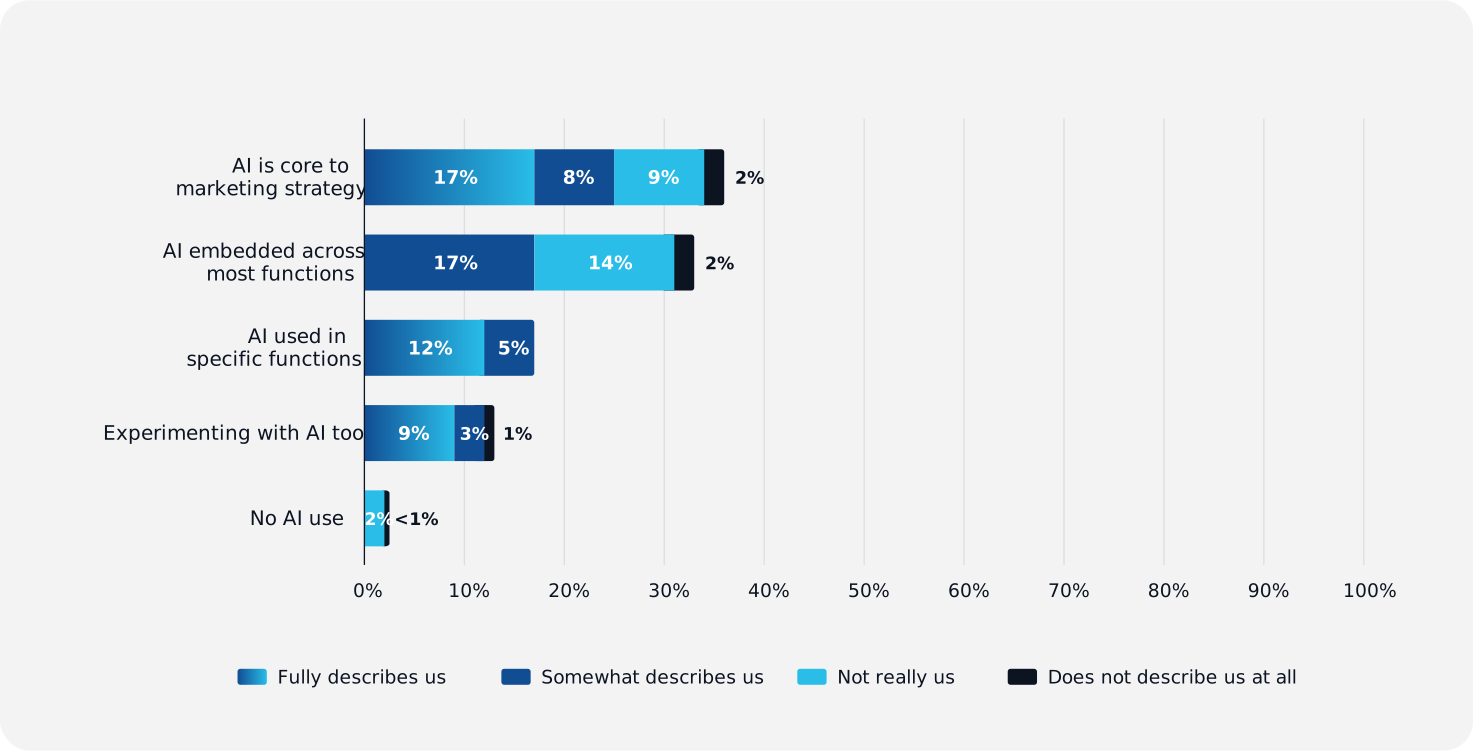
Even though B2B marketing revenue leaders describe their current use of AI across marketing functions as ranging from early experimentation to broader strategic integration, internal adoption doesn’t automatically translate into external visibility.
AI Overviews appear in 50% of the searches where enterprise B2B brands already rank, but the typical brand earns a citation in only 3% of the relevant AI-generated summaries. Organisations need to connect internal AI use with content and authority work that helps platforms understand and reference the brand.
AI being core to marketing strategy fully describes 17% of our audience and somewhat describes 8%, while 9% feel it doesn’t really fit, and 2% feel it doesn’t describe them at all. Making AI central means using it to support planning, delivery and decision-making rather than treating it as an isolated tool.
From experimentation to enterprise-wide AI adoption
AI embedded across most functions somewhat describes 17%, while 14% feel this doesn’t really fit, and 2% feel it doesn’t describe them at all. Wider integration requires shared processes and standards across content, reporting, customer insight and other areas of marketing.
Using AI in specific functions fully describes 12% and somewhat describes 5%. This targeted approach lets teams focus on clear use cases before deciding where broader adoption will add value.
Experimenting with AI tools fully describes 9% and somewhat describes 3%, while 1% feel it doesn’t describe them at all. These teams are still working out where AI delivers reliable value, which tools fit existing workflows and what level of oversight is needed before use expands.
No AI use doesn’t really describe 2%, and it doesn’t describe less than 1% at all. AI has entered almost every organisation in some form, even where it remains limited to testing or isolated functions.
Which team leads B2B marketing revenue leaders’ AI search optimisation readiness efforts?
For 35% of B2B marketing revenue leaders, the in-house marketing team is the most likely option for leading their AI search optimisation readiness efforts, the IT or technical team absolutely leads 10% of efforts, and most likely leads 19% too, and an external agency is used to lead 7% of AI search optimisation efforts, but 29% of leaders don’t have anyone leading their efforts currently
The work is moving, but leadership is still scattered:
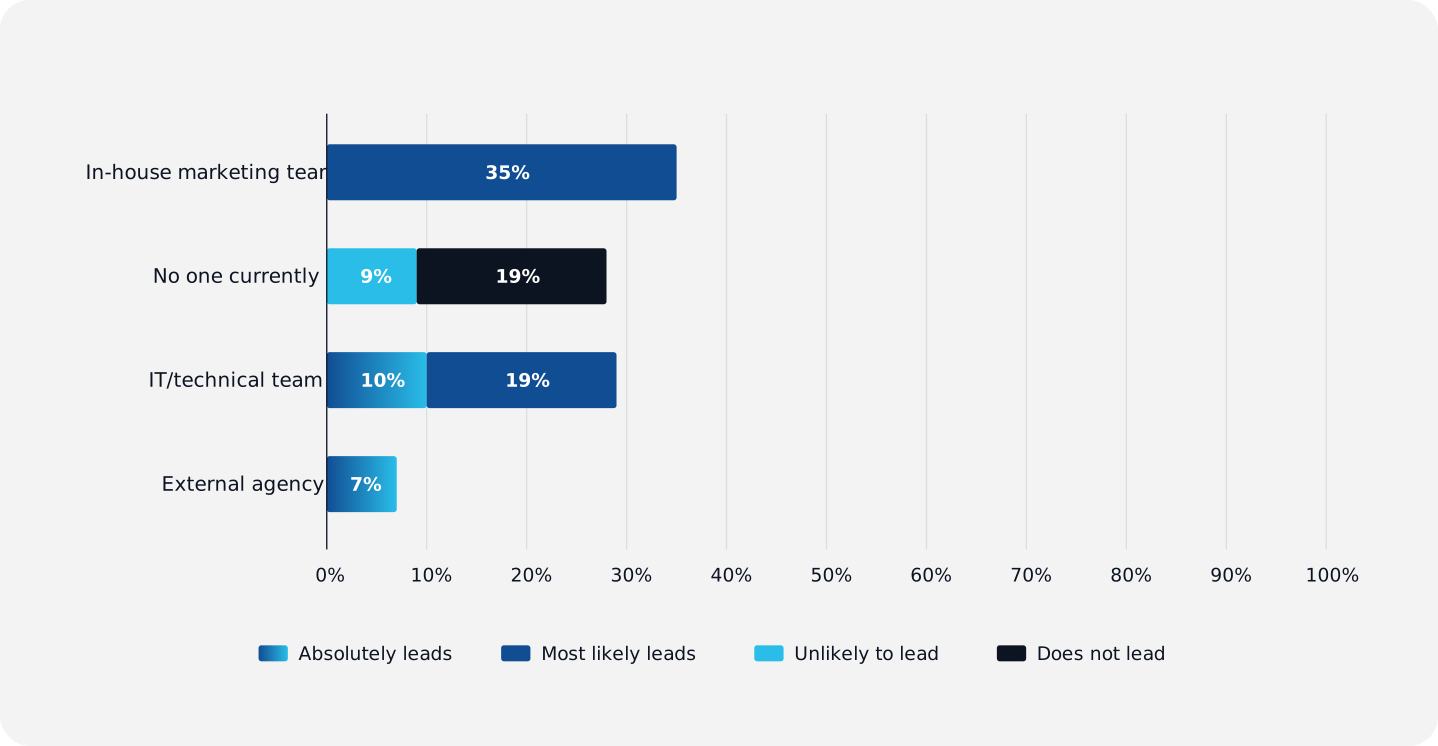
The team leading AI search optimisation readiness efforts varies across B2B marketing revenue leaders’ organisations, with delivery sitting in different parts of the business.
The in-house marketing team is most likely to lead for 35% of our audience. Marketing is closest to content, organic search, brand visibility and buyer behaviour, so it is well placed to turn AI search requirements into practical changes across campaigns, reporting and content planning.
No-one currently leads for 29%. Without a team driving the work, activity is more likely to remain scattered across isolated experiments, one-off audits and individual tools. This makes it harder to coordinate priorities, maintain momentum and turn early interest into a consistent programme.
The IT or technical team absolutely leads for 10% and is most likely to lead for another 19%. Technical teams bring expertise in systems, data and implementation, but they still need close input from marketing to keep the work tied to visibility, content and buyer discovery.
An external agency absolutely leads for 7%. Agencies bring specialist knowledge and additional capacity, particularly where internal capability is limited, but progress still depends on clear direction and support from inside the organisation.
Who owns AI search optimisation readiness within B2B marketing revenue leaders’ organisations?
A cross-functional group is clearly responsible for AI search optimisation readiness within 39% of B2B marketing revenue leaders in their organisations, and 40% say this is likely where the responsibility lies, while a dedicated AI or innovation team is likely the owner for 21%
AI search ownership is becoming a team sport:
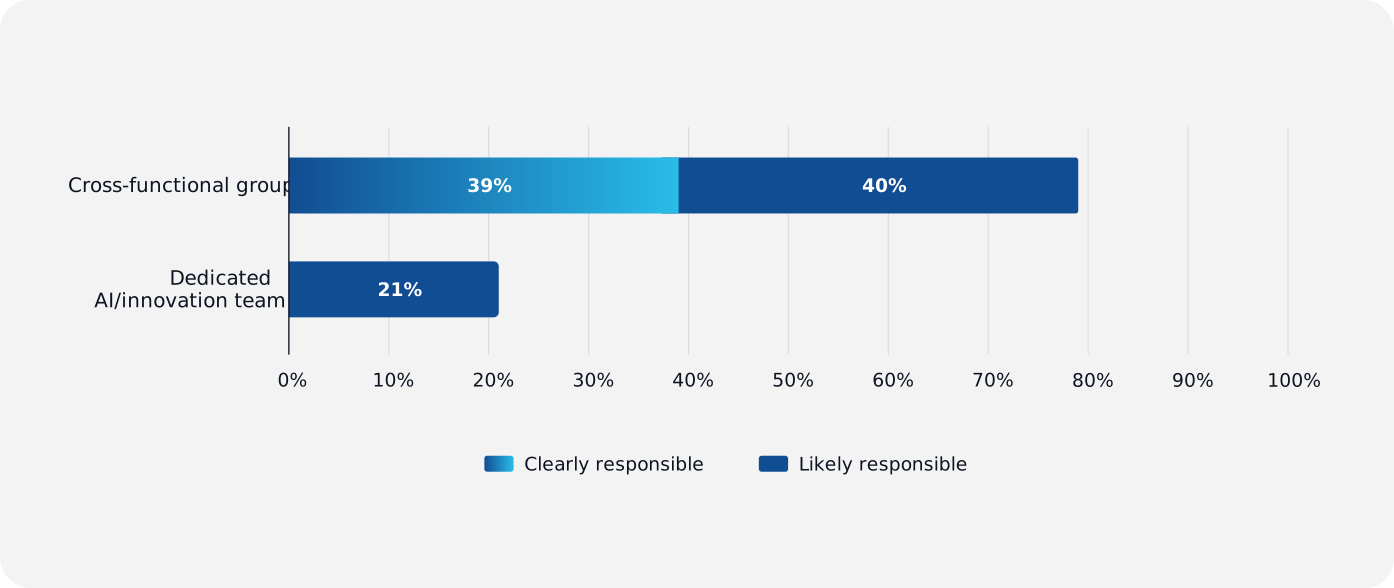
Ownership of AI search optimisation readiness is broader than the team leading the day-to-day work.
A cross-functional group is clearly responsible in 39% of B2B marketing revenue leaders’ organisations, and this group is likely responsible for another 40%. This structure recognises that readiness depends on more than one function.
Marketing brings the brand, content, and buyer perspective, while the technical, data, and leadership teams support implementation, measurement, and wider business alignment. Shared ownership also makes it easier to connect AI search activity with decisions that sit across several parts of the organisation.
The challenge is keeping responsibility clear. Cross-functional ownership works best when roles, priorities and decision-making are defined, rather than spread so widely that progress slows or accountability becomes unclear.
A dedicated AI or innovation team is likely responsible for the remaining 21%. This gives organisations a specialist centre for testing tools, building capability and guiding adoption. However, the team still needs close input from marketing and other commercial functions so AI search readiness stays connected to visibility, content and revenue goals.
The state of AI search optimisation readiness
These opinions show that AI search optimisation readiness is developing, but progress remains uneven across organisations. Leaders recognise the growing importance of AI-led discovery, yet capability, ownership and confidence are still being built.
Readiness depends on turning awareness into a coordinated approach that connects strategy, skills and execution. Organisations that do this well will be better placed to protect visibility, adapt faster and compete as AI search becomes part of everyday buyer research.
Sourced using Artios from an independent sample of 85,685 opinions of B2B marketing revenue leaders in the UK across X, Quora, Reddit, Bluesky, TikTok and Threads. Responses are collected within a 95% confidence interval and 5% margin of error. Results are derived from what people describe online, from opinions expressed, not actual questions answered by people in the sample.

Send to your email
Enter your email below and a link to download the PDF of this article will be sent directly to your inbox.