AI Search Attribution Statistics: UK 2026


Send to your email
Enter your email below and a link to download the PDF of this article will be sent directly to your inbox.

AI search is becoming an increasingly important part of the B2B buyer journey, influencing how people discover brands, research solutions and compare potential providers. As this journey becomes more complex, businesses need to understand where their brand appears in AI-generated results and how that visibility connects with trust, engagement and commercial outcomes.
To find out what 174,745 opinions of B2B Marketing Revenue Leaders in the UK were about AI search attribution, we utilised AI-driven audience profiling to synthesise insights from online discussions over 12 full months ending on the 23rd of September 2026, to a high statistical confidence level. The findings pinpoint where businesses are already incorporating AI search into their measurement strategies and where gaps remain between AI visibility, buyer activity and measurable revenue.
Index
- Methodology and data
- 30% of B2B marketing leaders agree that ChatGPT or OpenAI tools are essential for informing search attribution, and 46% use these tools sometimes, but 15% rarely use these tools, and 4% don't use ChatGPT or OpenAI; just 2% agree that Perplexity is essential for informing search attribution, and another 2% use it sometimes, 1% find Google Gemini absolutely essential, and no one mentions using Microsoft Copilot for this purpose
- Google AI Overviews are the top driver for 2% of B2B marketing leaders for driving brand visibility; and 21% agree these overviews are a strong contender, but 13% don’t think they are the best, and 2% don't find them effective; 6% agree Perplexity is the top driver, and it’s a strong contender for 14%, but not for 4%, while 3% point to Microsoft Copilot as the top driver of brand visibility, and 115 agree it’s strong, compared to 5% who don't find it the best; ChatGPT is the top brand visibility driver for 3% and a strong contender for 9%, but 6% don’t find it the best or effective
- Financial services is the industry vertical that 97% of B2B marketing leaders agree is ahead on AI search attribution, while 3% put technology and SaaS in the lead
- 67% of B2B marketing leaders measure brand trust within AI search attribution by sentiment analysis of AI mentions, and 33% measure it by the frequency of accurate brand citations
- 100% of B2B marketing leaders are not very confident in their AI search attribution accuracy, indicating plenty of room for improvement
- 80% of B2B marketing leaders don’t currently validate AI search attribution data accuracy, while the other 20% cross-reference this data with CRM data to ensure it is accurate
- The state of AI search attribution
Methodology and data
Sourced using Artios from an independent sample of 174,745 opinions of B2B marketing revenue leaders in the UK across X, Quora, Reddit, Bluesky, TikTok and Threads. Responses are collected within a 95% confidence interval and a 5% margin of error. Results are derived from what people describe online, from opinions expressed, not actual questions answered by people in the sample.
Which AI tools do B2B marketing revenue leaders use to inform AI search attribution?
30% of B2B marketing leaders agree that ChatGPT or OpenAI tools are essential for informing search attribution, and 46% use these tools sometimes, but 15% rarely use these tools, and 4% don’t use ChatGPT or OpenAI; just 2% agree that Perplexity is essential for informing search attribution, and another 2% use it sometimes, 1% find Google Gemini absolutely essential, and no one mentions using Microsoft Copilot for this purpose.
ChatGPT and OpenAI lead the way:
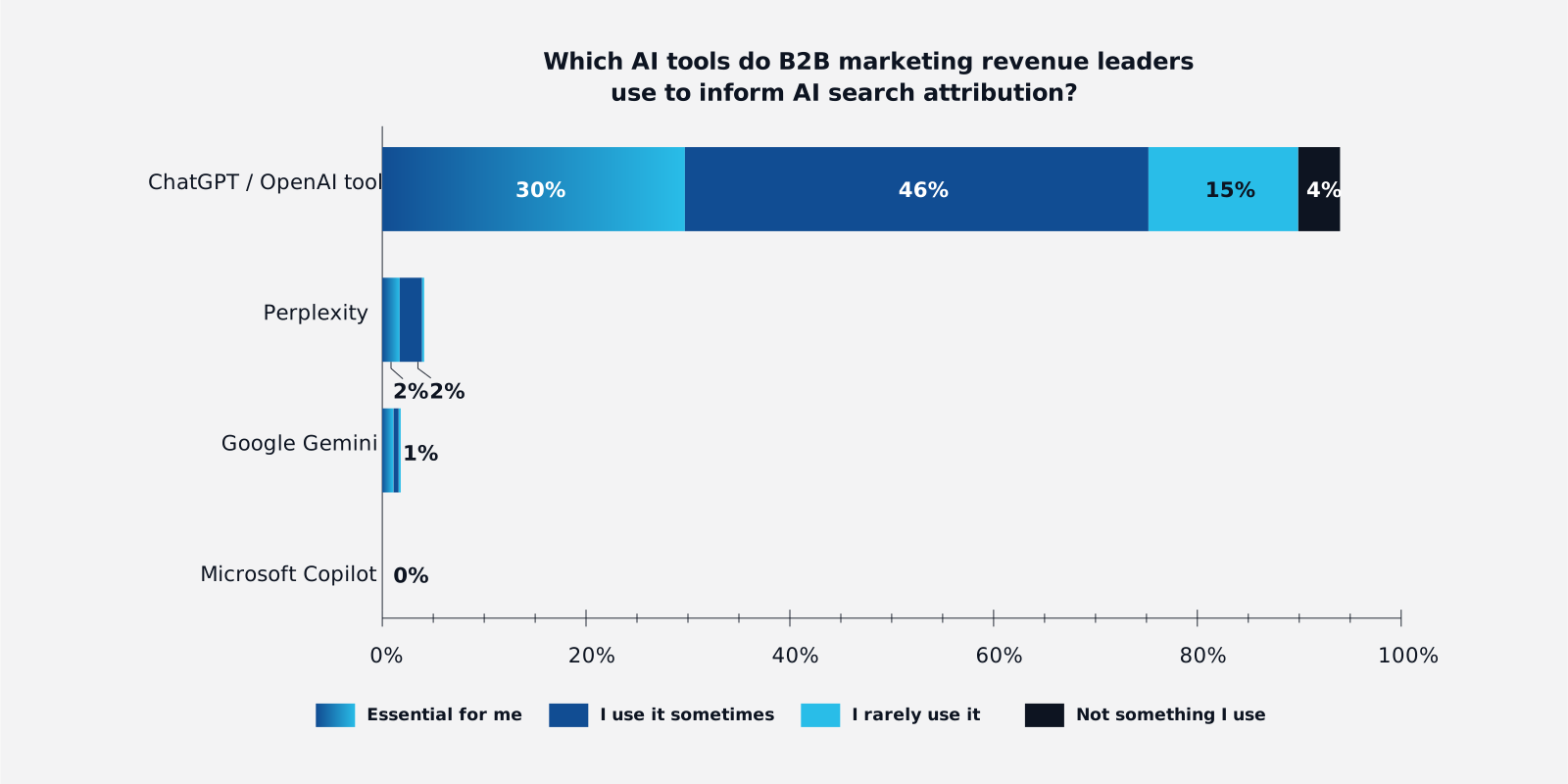
ChatGPT and other OpenAI tools are evidently the most widely used AI platforms for informing search attribution. They are essential for 30% of B2B marketing revenue leaders, while 46% use them sometimes. A further 15% use them rarely, and 4% do not use them at all. This means 91% of B2B buyers engage with ChatGPT or OpenAI tools to some degree, from occasional to essential use.
ChatGPT's strong position amongst our audience matches the 2026 AI B2B Marketing Report, where 34% of B2B marketing leaders identify ChatGPT as their most important AI tool.
Other platforms play a far smaller role. Perplexity is essential for 2% of B2B marketing revenue leaders, used sometimes by 2% and used rarely by less than 1%. Google Gemini is essential for 1% of our audience, with less than 1% using it sometimes and less than 1% rarely using it. Microsoft Copilot receives no responses, indicating no reported use for search attribution in this group.
Which generative AI platform drives most brand visibility for B2B marketing revenue leaders?
Google AI Overviews are the top driver for 2% of B2B marketing leaders for driving brand visibility; and 21% agree these overviews are a strong contender, but 13% don’t think they are the best, and 2% don't find them effective; 6% agree Perplexity is the top driver, and it’s a strong contender for 14%, but not for 4%, while 3% point to Microsoft Copilot as the top driver of brand visibility, and 115 agree it’s strong, compared to 5% who don't find it the best; ChatGPT is the top brand visibility driver for 3% and a strong contender for 9%, but 6% don’t find it the best or effective.
Visibility is driven from different platforms:
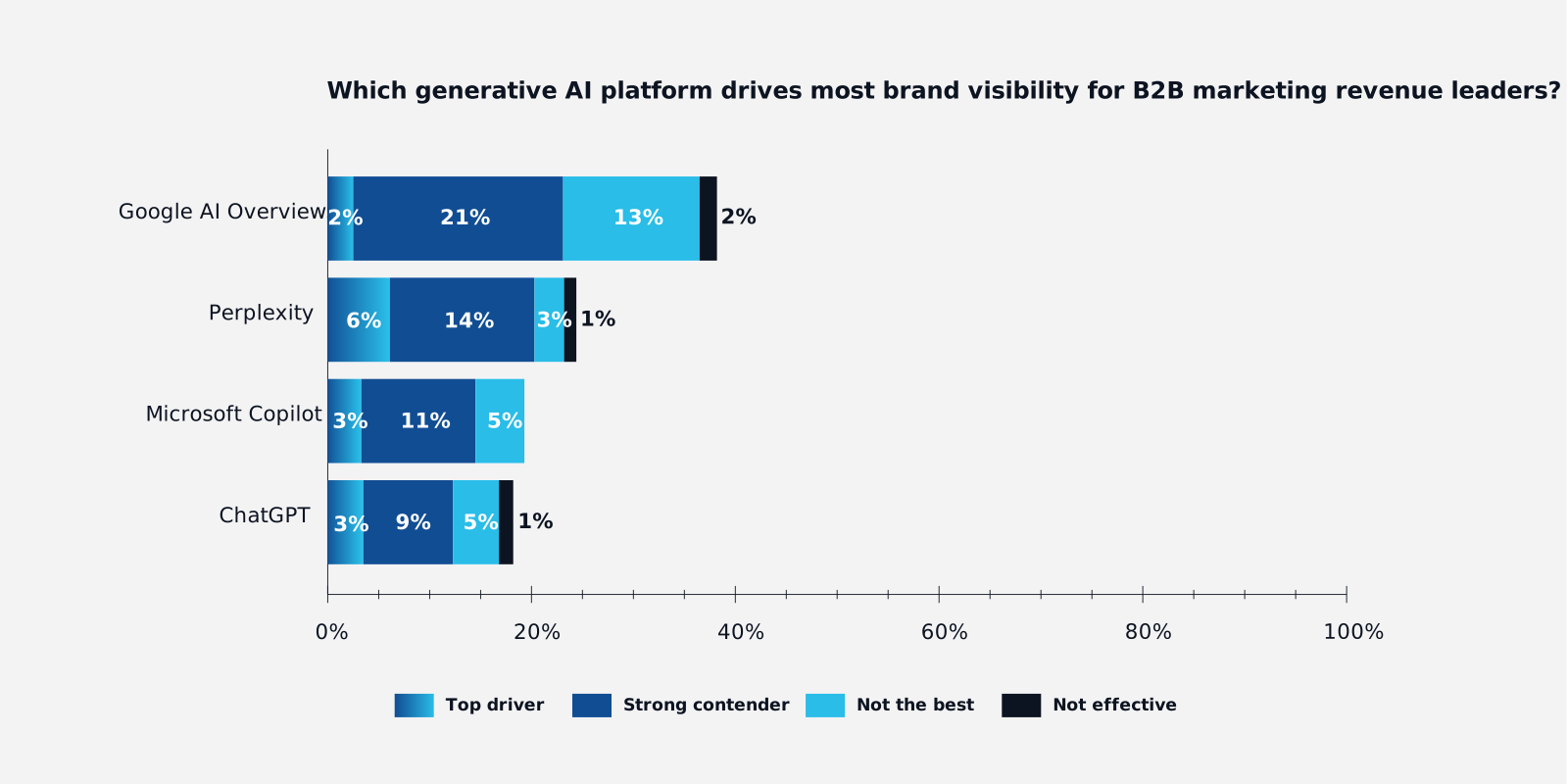
Google AI Overviews are the strongest platform overall, with 21% of B2B marketing revenue leaders calling them a strong contender and 2% naming them the top driver of brand visibility. However, this strength is not unanimous, as 13% of our audience do not consider them the best option, and 2% find them ineffective.
This reach is important because Google AI Overviews appear on about 30% of UK searches, while 73% of B2B buyers use generative AI during their research process.
Perplexity follows with 6% of B2B marketing revenue leaders identifying it as the top driver and 14% rating it a strong contender. Only 3% of our audience say it is not the best, and 1% considers it ineffective.
Despite not featuring previously, in this case, Microsoft Copilot ranks as the top driver for 3% of B2B marketing revenue leaders, a strong contender for 11%, and not the best for 5%, with no figure given for ineffective use.
Finally, ChatGPT is the top driver for 3% of B2B marketing revenue leaders, a strong contender for 9%, not the best for 5%, and ineffective for 1%. This rather flips the script on the previous results, where ChatGPT was the most used tool by far.
Which industry vertical is ahead on AI search attribution according to B2B marketing revenue leaders?
Financial services is the industry vertical that 97% of B2B marketing leaders agree is ahead on AI search attribution, while 3% put technology and SaaS in the lead.
One vertical is far ahead in the race:
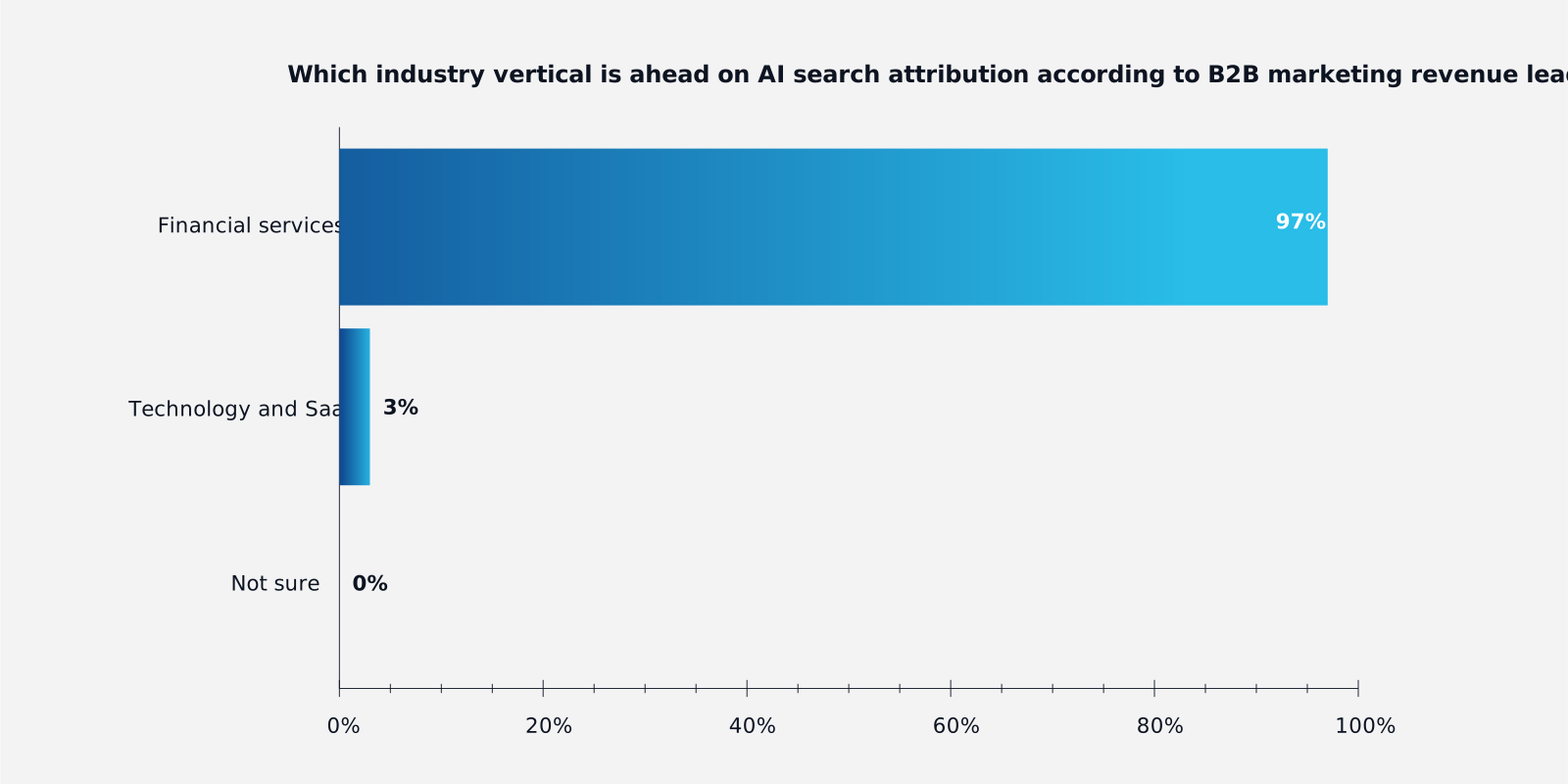
Financial services leads the AI search attribution landscape by a wide margin, accounting for 97% of the results. Technology and SaaS make up the remaining 3%, while 0% of our audience are unsure which industry vertical leads in AI search attribution. The gap shows that the financial services sector currently has the clearest position among B2B marketing revenue leaders in connecting AI search activity with business performance.
The strong representation from financial services fits broader UK patterns, where the sector is identified as the leading industry for AI search attribution. Technology and SaaS still have a presence, but their smaller share indicates that attribution is far less established in this group.
The wider UK picture also reveals that AI use is strongest in digitally focused and knowledge-based industries. According to the Office for National Statistics, information and communication businesses have some of the highest adoption levels, with almost three-fifths using at least one AI technology. Private education also records high use, while construction is much lower at 13%.
These patterns help explain why technology and SaaS remain visible in AI search, even though financial services leads this attribution graph. The 0% unsure result confirms that the audience has a definite view of the sector currently setting the pace.
How do B2B marketing revenue leaders measure brand trust within AI search attribution?
67% of B2B marketing leaders measure brand trust within AI search attribution by sentiment analysis of AI mentions, and 33% measure it by the frequency of accurate brand citations.
Metrics have two roots:
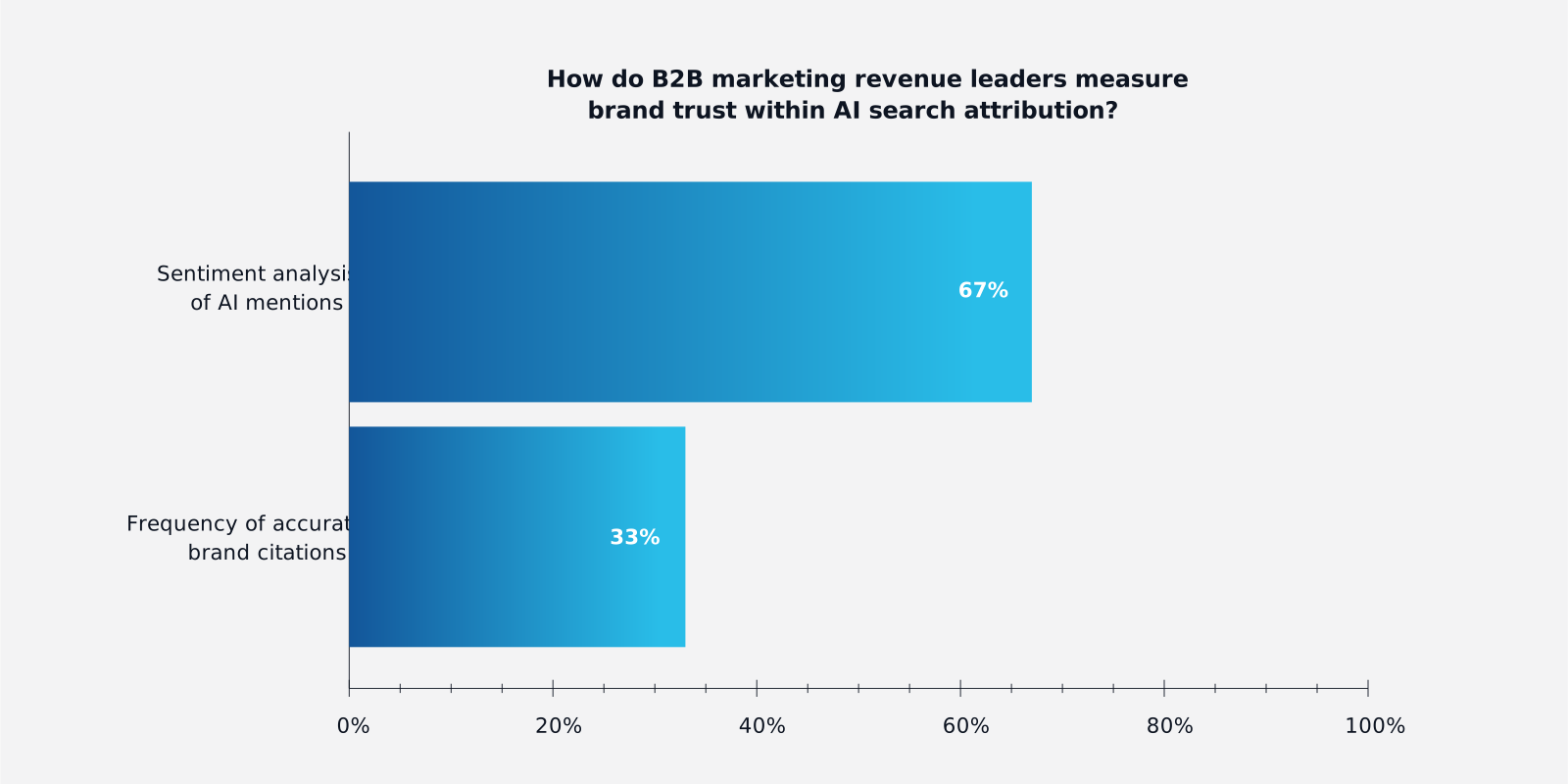
B2B marketing revenue leaders mainly measure brand trust in AI search attribution through sentiment analysis, which accounts for 67% of the results. They assess whether AI platforms describe a brand positively, neutrally or negatively, rather than only counting how often the brand appears. This method illustrates to leaders what impression their organisation creates in AI-generated answers and helps them understand how people may perceive the brand during online research.
The remaining 33% of our audience focuses on the accuracy of brand citations. B2B market revenue leaders check whether AI platforms present the correct services, market position and business information when they mention an organisation. Accurate citations strengthen confidence in the information, while errors can create confusion even when a brand achieves strong visibility.
Sentiment analysis and citation accuracy therefore measure different parts of trust. The first examines how AI presents a brand, while the second checks whether AI represents it correctly. Together, these two metrics give marketing teams a practical way to assess the quality of their presence in AI search and identify where clearer, more reliable brand information could improve future results.
How confident are B2B marketing revenue leaders in their AI search attribution accuracy?
100% of B2B marketing leaders are not very confident in their AI search attribution accuracy, indicating plenty of room for improvement.
Confidence is unanimously low:
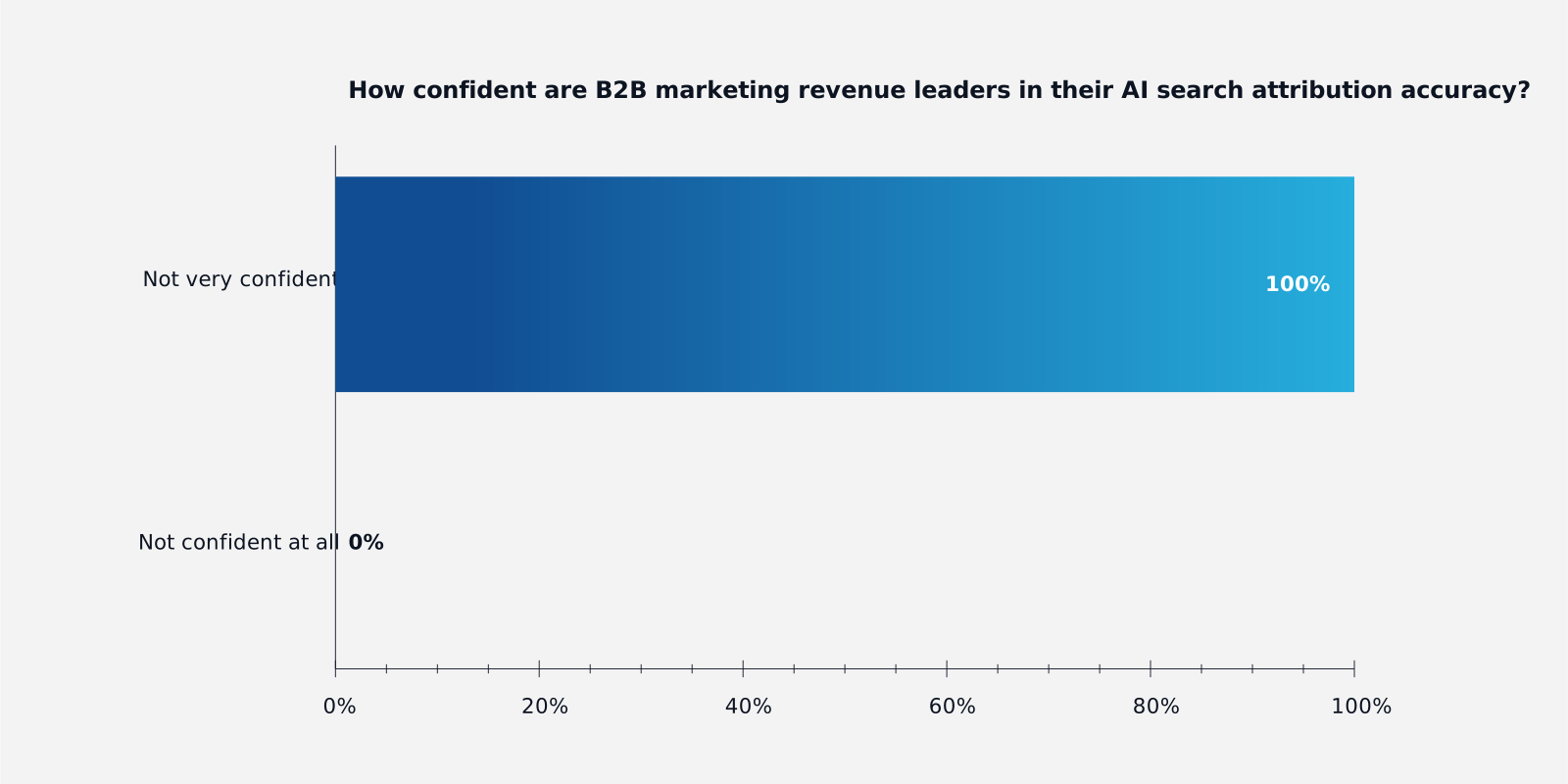
Confidence in AI search attribution accuracy remains cautious, with 100% of B2B marketing revenue leaders describing themselves as not very confident. This means everyone represented in the graph sees room to improve how they track AI visibility, mentions, and resulting business value. At the same time, 0% report being not confident at all, showing that no one has completely rejected the accuracy of current attribution methods.
This cautious position is notable alongside the growing importance of AI visibility for B2B marketing. Forrester reports that 90% of B2B marketing leaders consider AI visibility at least an investment-level priority, according to its analysis of AI search and B2B marketing accountability.
As more organisations commit resources to appearing in AI-generated answers, reliable measurement becomes increasingly important. The data points to a clear next step where leaders are engaged with AI search attribution but need stronger systems to connect visibility with brand trust, buyer activity, and revenue.
How do B2B marketing revenue leaders validate AI search attribution data accuracy?
80% of B2B marketing leaders don’t currently validate AI search attribution data accuracy, while the other 20% cross-reference this data with CRM data to ensure it is accurate.
Data accuracy is not yet prioritised:
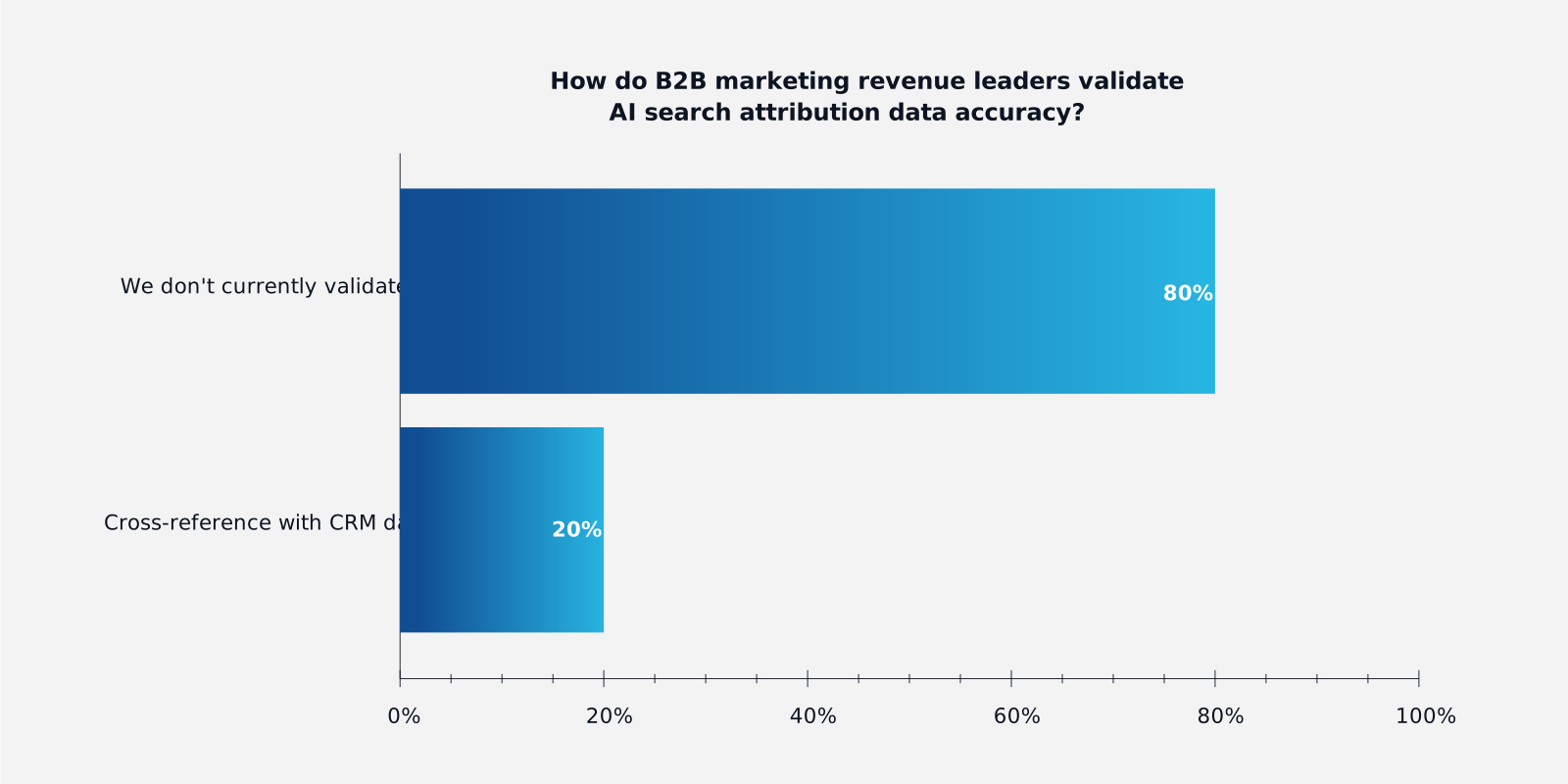
80% of B2B marketing revenue leaders do not currently validate attribution data from AI search. Most people therefore track brand visibility, mentions or possible influence without checking whether these signals connect with genuine business activity. They may know that AI platforms reference their organisation, but they cannot yet confirm whether that exposure contributes to website visits, enquiries, sales opportunities or revenue.
This result follows the previous graph, where 100% described their confidence in AI search attribution as not very high and 0% reported having no confidence at all.
The remaining 20% of B2B marketing revenue leaders cross-reference AI search data with their customer relationship management records. This process lets them compare AI visibility with identifiable leads, active opportunities, and completed sales. It also creates a clearer route from an AI mention to a measurable commercial outcome, although it cannot always prove that AI search caused the result.
The difference between results suggests that formal accuracy checks remain limited. Marketing teams can build confidence by recording AI mentions consistently, matching them with CRM activity, and reviewing results over time.
The state of AI search attribution
Overall, it’s evident that AI search is already influencing how B2B brands think about visibility, trust and the wider buyer journey, but attribution remains an emerging discipline. Businesses are using a range of AI platforms to understand brand presence, while sentiment and citation accuracy are becoming important ways to assess how brands are represented.
The bigger challenge is connecting AI visibility with meaningful commercial activity. As AI becomes more embedded in B2B research journeys, stronger measurement frameworks will be needed to show how visibility translates into genuine buyer engagement and business outcomes.

Send to your email
Enter your email below and a link to download the PDF of this article will be sent directly to your inbox.