B2B Buyer Journeys in AI Search Statistics: UK 2026


Send to your email
Enter your email below and a link to download the PDF of this article will be sent directly to your inbox.

AI search is rapidly rewriting the B2B buyer journey. From how decision-makers research solutions to how brands are discovered and evaluated, platforms like ChatGPT, Gemini, and Perplexity are changing the rules of digital visibility. As traditional search behaviour shifts, B2B marketing revenue leaders are under growing pressure to understand how AI influences buyer decisions, brand perception, and pipeline performance.
To find out what 555,973 opinions of B2B marketing revenue leaders in the UK were about buyer journeys in AI, we utilised AI-driven audience profiling to synthesise insights from online discussions over 12 months, ending on May 19th, 2026, to a high statistical confidence level. The results reveal how organisations across the UK are responding to the rise of AI-driven discovery, where the biggest challenges lie, and what businesses are prioritising to stay competitive in AI-first search.
Index
- 67% of B2B marketing revenue leaders' buyers are typically researching solutions through AI search tools before engaging with their sales team, 13% are doing their research at events and webinars, 9% via search engines, and 1% through a mix of traditional and AI search, while 10% are using other research methods
- 42% of B2B marketing revenue leaders’ buyers are using ChatGPT during their research, 17% are using Google’s Gemini, 3% Claude, and 1% Perplexity, while 12% are using other search tools
- 9% of B2B marketing revenue leaders somewhat monitor their ChatGPT or Perplexity results, but 68% don’t really do so, 6% monitor these results occasionally, 6% have never monitored them, and while 6% do monitor them, the information is sometimes inaccurate, and 6% don't believe they appear in AI search results at all
- 59% of B2B marketing revenue leaders have not specifically tracked how the rise of AI search has affected the volume of organic search traffic to their organisation’s website in the last 12 months; however, 11% have found that traffic has remained much the same, while 11% have seen a noticeable increase, and 18% have noted a decrease
- 54% B2B marketing revenue leaders are very concerned that AI search tools are misrepresenting their brand or solutions to potential buyers and have already noted an impact on their pipeline, 22% are somewhat concerned about misrepresentation, 5% are neutral about the impact, and 19% are not really concerned
- Understanding of how AI search tools surface and represent B2B marketing revenue leaders’ organisations is high, with 73% actively monitoring and measuring this and 7% having a reasonable understanding; however, 13% have a limited understanding of how AI represents them, and 7% see this as a blind spot
- 23% of B2B marketing revenue leaders rate developing a robust AI search strategy as critical for their organisation, and 24% as high, 18% feel an AI search strategy is of medium importance, and 18% don’t see it as a priority, while 17% are unsure and need more information
- 55% of B2B marketing revenue leaders’ organisations are aware of GEO but have not yet started implementing a strategy, but 34% argue that this is not the case for them, and a further 8% disagree that they're still relying on traditional SEO with no GEO-specific work approach
- 63% of B2B marketing revenue leaders have a dedicated budget for activities specifically designed to improve their visibility in AI search, 29% are planning to allocate budget to GEO in the next 12 months, 4% are funding AI search from existing SEO budgets, and 4% have no budget currently allocated
- 36% of B2B marketing revenue leaders are not currently using AI tools in marketing, 7% are using them for competitive intelligence, 5% for content creation and copywriting, and 2% for SEO and keyword research; however, 49% are using AI tools for other marketing purposes beyond these
- 56% of B2B marketing revenue leaders currently measure the influence of AI search on their pipeline and revenue using specific metrics and dashboards for AI search attribution, 3% track organic search broadly but not AI search specifically, and 41% are in the process of building the capability to measure the impact
- Keeping up with rapidly changing AI search behaviours is a challenge for 38% of B2B marketing revenue leaders in an AI search-first environment, 11% battle to understand how AI tools represent their brand or category, another 11% struggle to measure the ROI of AI search-focused content, and 11% have other AI-search-related challenges
- Having better tools to monitor AI search brand representation would help 83% of B2B marketing revenue leaders’ organisations improve their performance in AI-driven buyer journeys, and a clear framework for AI search optimisation would help 18%
- 77% of B2B marketing revenue leaders are not confident in their organisation's ability to adapt marketing strategies to remain visible and competitive as AI search continues to evolve, but 17% are fairly confident, and 4% are very confident, while 3% are unaware of their position
- Just 3% of B2B marketing revenue leaders think that it’s somewhat likely their organisation’s investment in AI search strategy will stay roughly the same compared to the 24% who feel this is unlikely, 21% think investment will increase by more than 25%, 4% think there will be a 10-25% increase, and 14% think there will be a decrease, while 22% have no current investment to grow from
- For 33% of B2B marketing revenue leaders, the typical sales cycle is less than a month, for 31%, cycles are 6-12 months, 29% have sales cycles of typically 1-3 months, and 4% 3-6 months, but 3%’s typical sales cycle is over 12 months
- 30% of B2B marketing revenue leaders have a marketing budget of £5-£10 million, 17% a budget of £1-£ 5 million. 12% £500k-£1 million and 1% under £500k
- 37% of B2B marketing revenue leaders’ primary job title is marketing director, and 1% are Chief Marketing Officers; however, 62% fall into other roles
- 54% of B2B marketing revenue leaders’ organisations operate in the financial services sector, 6% in professional services, 5% in healthcare and life sciences,3% in manufacturing and industrial, and 23% are in other sectors
- 52% of B2B marketing revenue leaders’ organisations have 5,000+ employees, 47% 50-200, 1% have 501-1,000 employees, and 1% have 210-500
- The future of B2B buyer journeys is already AI-driven
- About the data
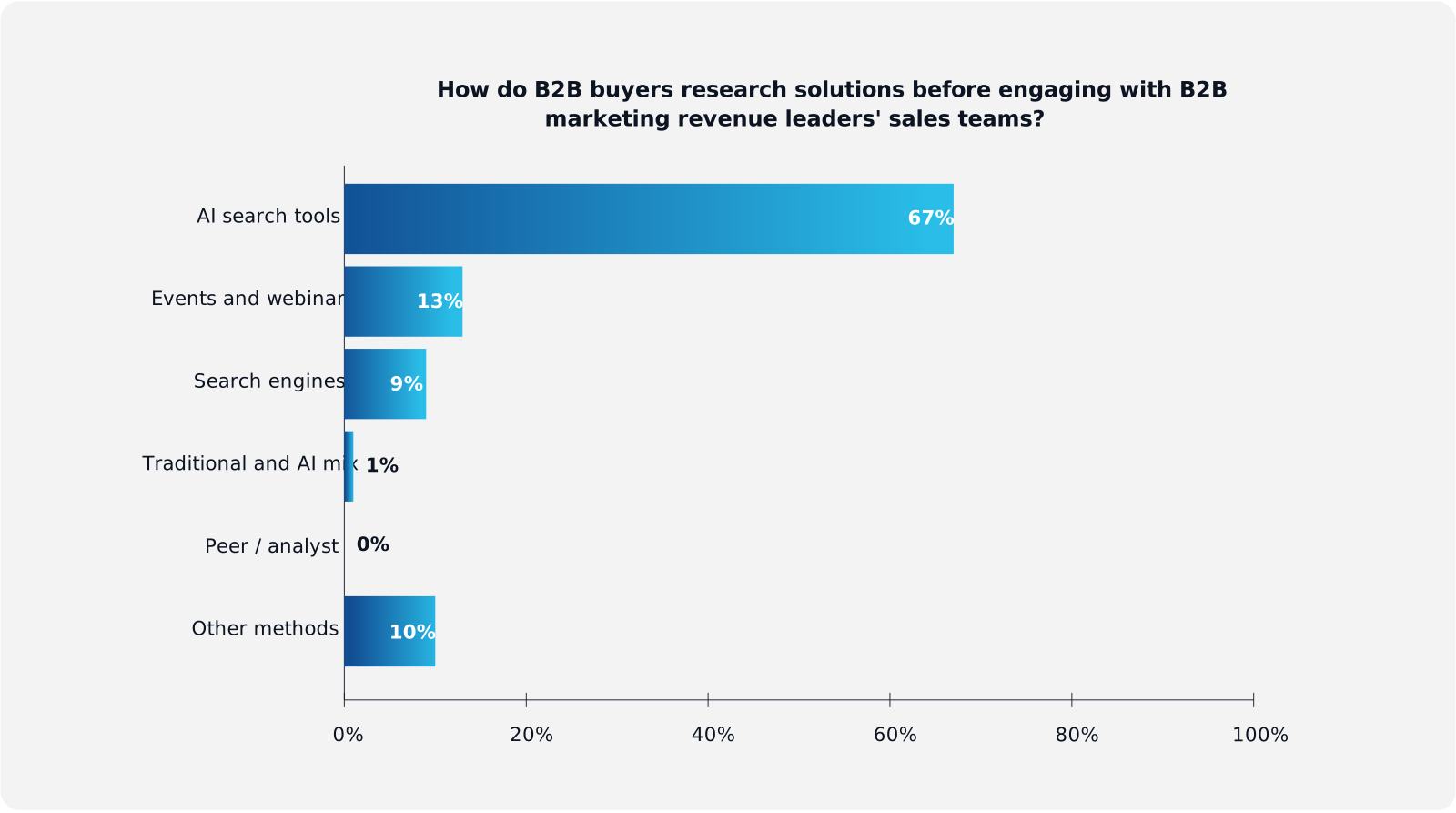
How do B2B buyers research solutions before engaging with B2B marketing revenue leaders' sales teams?
67% of B2B marketing revenue leaders' buyers are typically researching solutions through AI search tools before engaging with their sales team, 13% are doing their research at events and webinars, 9% via search engines, and 1% through a mix of traditional and AI search, while 10% are using other research methods
AI search tools lead the way for researching:
DataReportal’s Digital 2026 Global Overview Report showed that generative AI adoption rose 53% over three years, with over 1.1 billion users of GenAI and LLM platforms conducting searches by October 2025.
These figures align with our audience, of which 67% of B2B marketing revenue leaders agree that their B2B buyers primarily use generative AI tools such as ChatGPT, Perplexity, Gemini, and CoPilot to research solutions. In comparison, traditional search engine use has declined significantly, with only 9% of buyers using Google or Bing. 1% say their buyers use a mix of traditional and AI search tools in their research.
13% of B2B buyers rely on tangible events, such as in-person events and webinars, for research, while 10% use other unspecified means. Conversely, 0% of our audience thinks that B2B buyers use peer recommendations or analyst reports, despite the long-standing influence these sources have traditionally held in enterprise purchasing decisions.
Which AI search tools are B2B marketing revenue leaders’ buyers using?
42% of B2B marketing revenue leaders’ buyers are using ChatGPT during their research, 17% are using Google’s Gemini, 3% Claude, and 1% Perplexity, while 12% are using other search tools
ChatGPT tops the list for AI search tools:
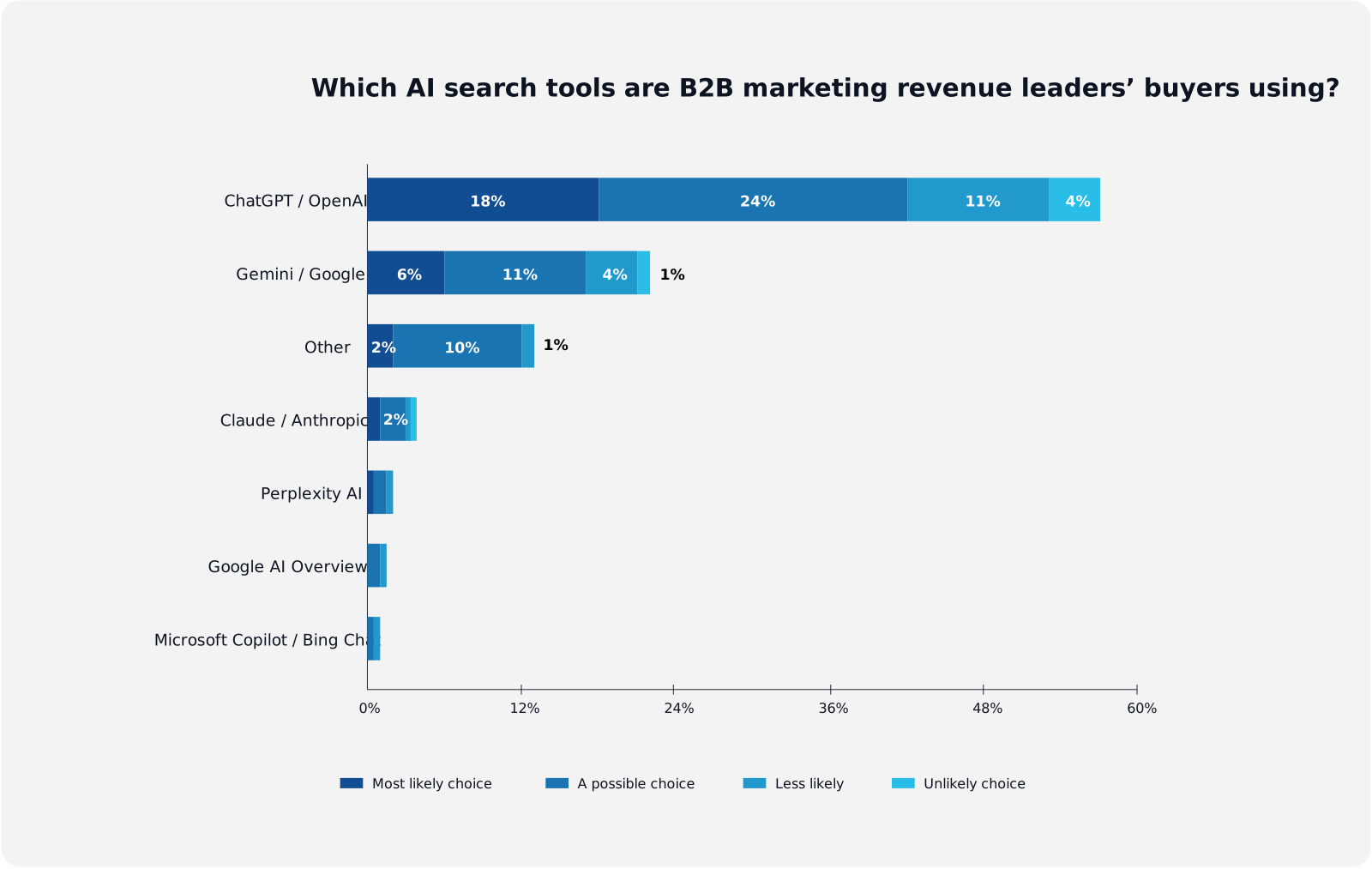
Most leaders in B2B marketing believe their buyers use ChatGPT over other AI tools during their research. Around 18% of our audience identified it as the most likely choice, 24% as a possible choice, 11% as less likely, and 4% as unlikely. Gemini followed at a distance, with 6% calling it the most likely option, 11% a possible choice, 4% less likely, and 1% unlikely.
“Other” AI tools received 2% for most likely, 10% for possible, and 1% for less likely. Claude recorded 1% as most likely, 2% possible, and less than 1% less likely. Less than 1% of opinions consider Perplexity as a likely or less likely choice, while 1% see it as a possible choice. Approximately 1% of opinions for Google AI Overviews lean towards the tool being a possible choice, with less than 1% seeing it as a less likely choice. Fewer than 1% have opinions on Microsoft Copilot and Bing, saying they are less likely or a possible choice.
OpenAI’s ChatGPT remains the most popular AI search tool despite expectations that Google would lead this industry. Recent ChatGPT data indicate OpenAI’s LLM has 900 million active users who use the app at least once a week, including 50 million Plus subscribers. Additionally, the company reportedly generated $8 billion for OpenAI in 2025, a 128% increase over the previous 12 months.
Do B2B marketing revenue leaders monitor ChatGPT or Perplexity results?
9% of B2B marketing revenue leaders sometimes monitor their ChatGPT or Perplexity results, but 68% don’t really do so, 6% monitor these results occasionally, 6% have never monitored them, and while 6% do monitor them, the information is sometimes inaccurate, and 6% don't believe they appear in AI search results at all
Monitoring of AI results is still low:
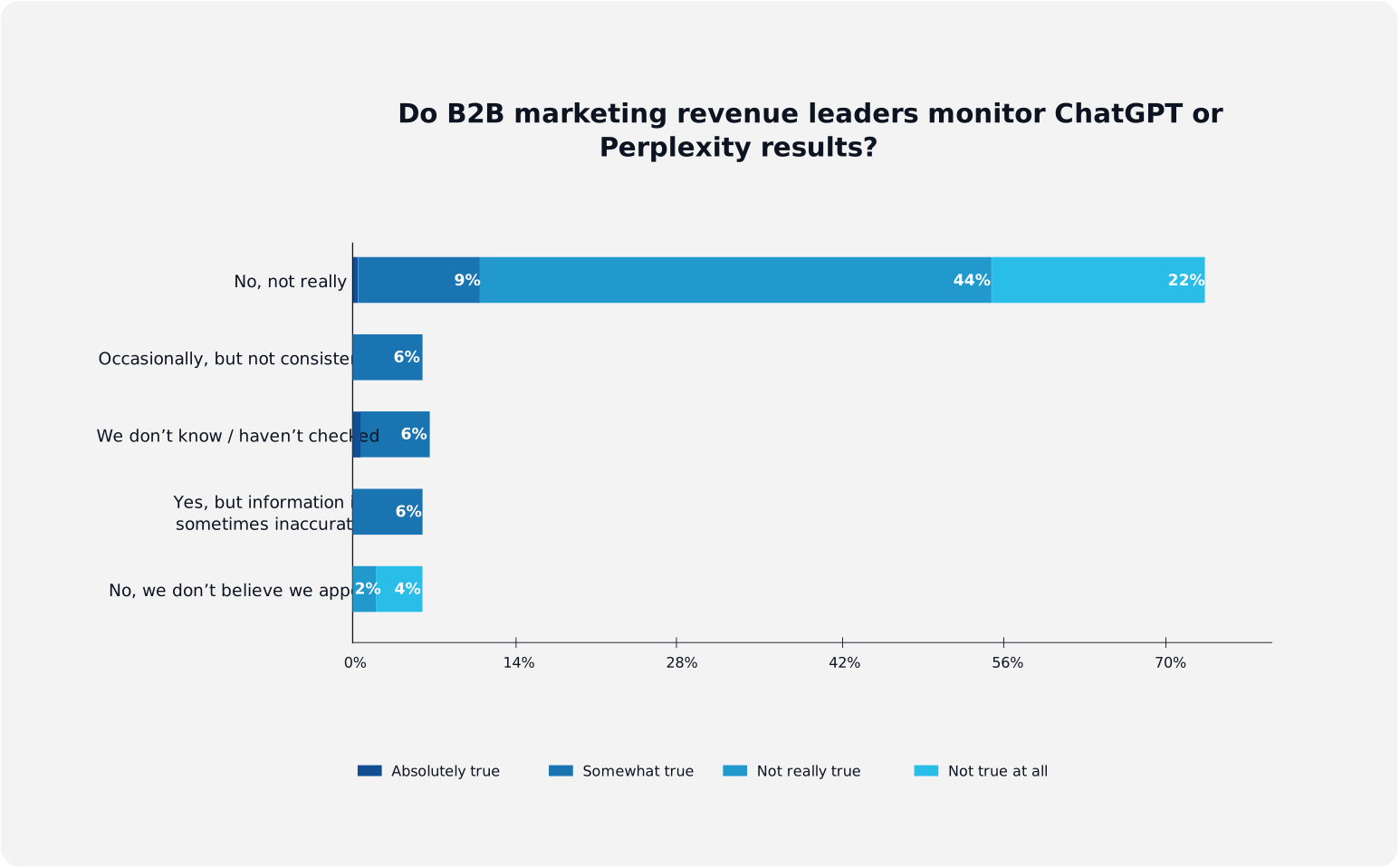
Most of our audience believes that B2B marketing revenue leaders do not consistently monitor how their brands appear in AI-driven search tools like ChatGPT or Perplexity. In fact, 44% said this is not really true, while another 22% said it’s not true at all. However, 9% actively monitor AI visibility.
6% check their AI visibility occasionally, but not consistently, and another 6% occasionally find AI-generated information inaccurate or incomplete. Approximately 1% do not know or have not checked their AI visibility on ChatGPT or Perplexity, while 6% say this is somewhat true. 2% of the opinions partially disagree that their brand does not appear in AI search results, while 4% felt it is completely untrue that their brand does not appear in these results.
These numbers reveal that many organisations are still early in adapting to AI-powered buyer journeys. However, this also emphasises a growing opportunity as new AI visibility and brand-monitoring tools now make it easier for businesses to track how they appear in generative search results and identify gaps in visibility, accuracy, and competitive presence.
How has AI search affected organic search traffic volume to B2B marketing revenue leaders' websites?
59% of B2B marketing revenue leaders have not specifically tracked how the rise of AI search has affected the volume of organic search traffic to their organisation’s website in the last 12 months; however, 11% have found that traffic has remained much the same, while 11% have seen a noticeable increase, and 18% have noted a decrease
AI search has impacted organic search traffic to varying degrees:
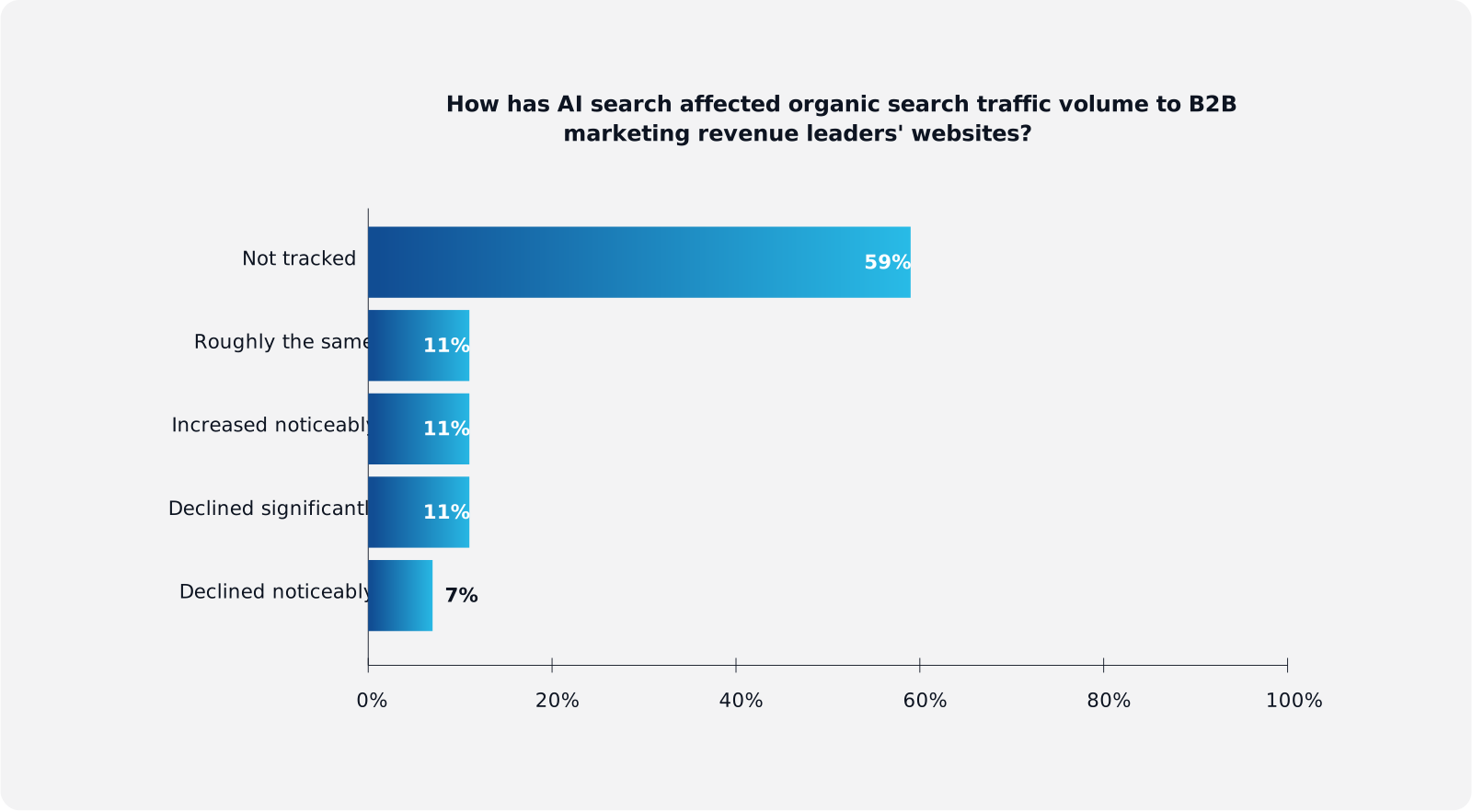
The rise of AI-powered search is already reshaping how B2B buyers discover brands online, although many organisations are still measuring the impact. Nearly six in 10 B2B marketing revenue leaders (59%) said they have not specifically tracked how AI search has affected their organic traffic in the past year.
Among those monitoring performance, results were mixed: 11% reported traffic remaining stable, another 11% saw noticeable increases, while 11% experienced significant declines, and 7% reported noticeable drops.
Such results show AI’s increasing influence on buyer journeys, with 50% of consumers already using AI-powered search tools. Industry estimates also suggest that 20-50% of traditional search traffic could be at risk as AI platforms answer questions and shape decisions earlier in the research process.
How concerned are B2B marketing revenue leaders that AI search tools misrepresent their brand?
54% B2B marketing revenue leaders are very concerned that AI search tools are misrepresenting their brand or solutions to potential buyers and have already noted an impact on their pipeline, 22% are somewhat concerned about misrepresentation, 5% are neutral about the impact, and 19% are not really concerned
Concerns about the impact of AI brand misrepresentation are varied:
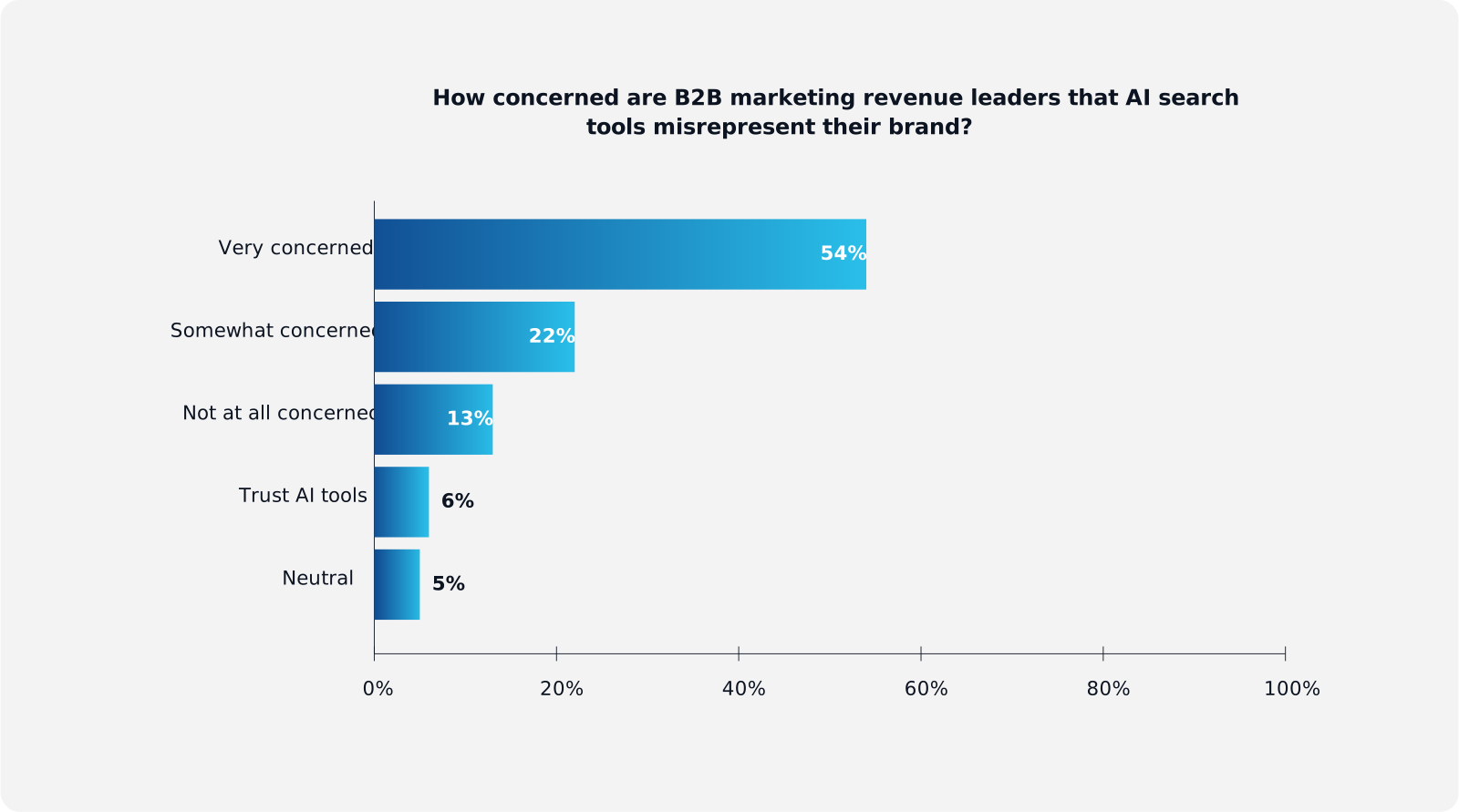
Concern about AI-driven brand representation is clearly growing among B2B marketing revenue leaders. More than half (54%) are very concerned and believe AI search tools are already affecting pipeline performance, while 22% see potential risk but have not yet quantified the impact. At the same time, 13% are not concerned at all, 6% trust AI platforms to accurately represent their brand, and 5% remain neutral or unsure of the long-term effects.
The concern emphasises a broader challenge facing brands in AI search environments. Tools such as ChatGPT, Gemini, and Perplexity can sometimes surface outdated reviews, stale aggregator content, or inaccurate claims. Because many users accept AI-generated answers without visiting the original website, even small inaccuracies can quietly influence buyer perception and decision-making.
Do B2B marketing revenue leaders' organisations understand how AI search tools surface and represent their brand?
Understanding of how AI search tools surface and represent B2B marketing revenue leaders’ organisations is high, with 73% actively monitoring and measuring this and 7% having a reasonable understanding; however, 13% have a limited understanding of how AI represents them, and 7% see this as a blind spot
Most understand how AI surfaces and represents their brand:
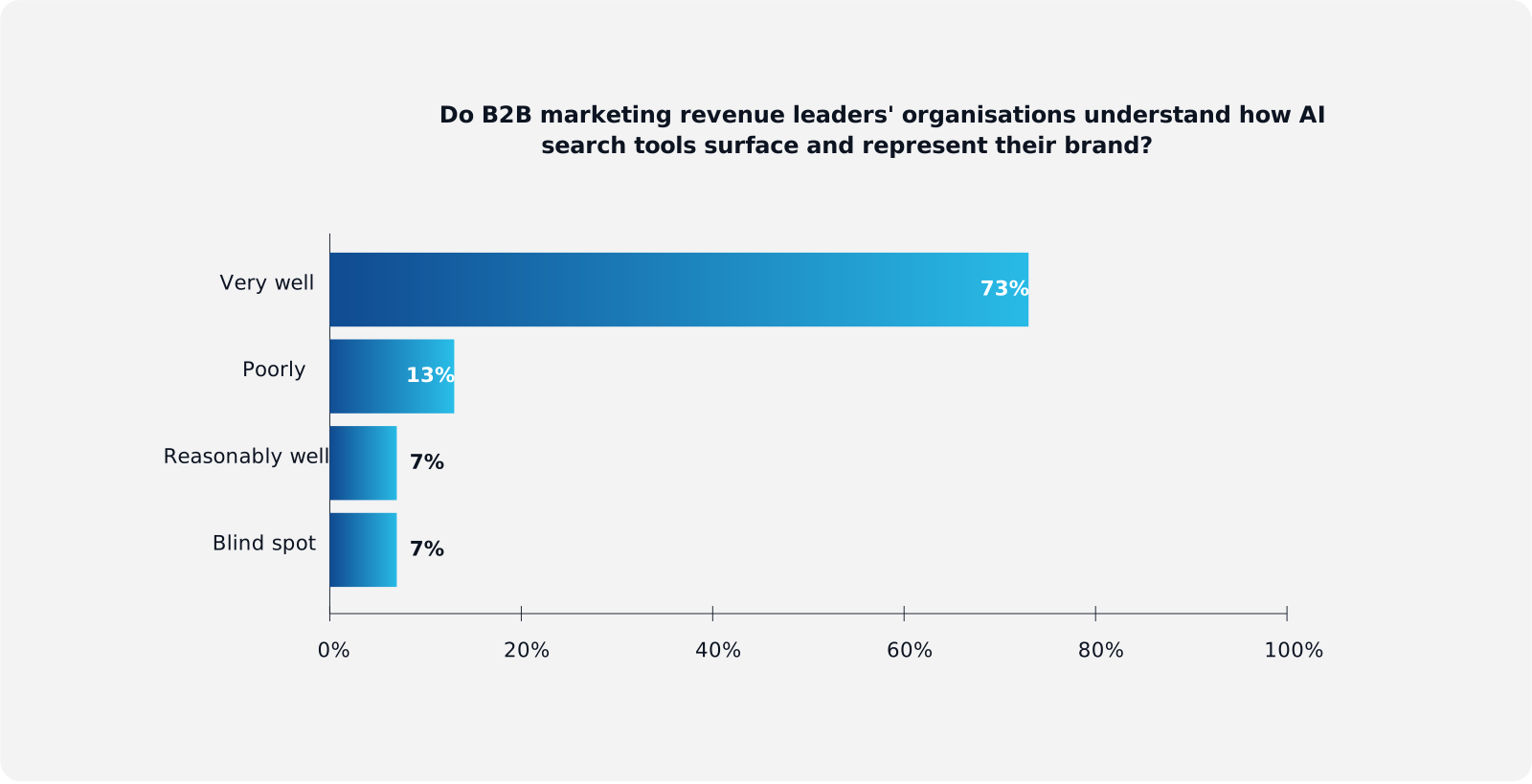
Most B2B marketing revenue leaders appear increasingly proactive about understanding how AI search tools represent their brands online. 73%’s organisations understand this very well, and already have active monitoring and measurement processes in place. A smaller group of 7% feel they have some insight, but no formalised process yet.
At the same time, the findings highlight ongoing opportunities for improvement. Around 13% feel they still understand AI representation poorly and have limited visibility into how AI tools surface their brand. Lastly, another 7% consider the issue a complete blind spot for their organisation.
As AI-powered discovery becomes more influential in B2B buyer journeys, the results indicate that many organisations are starting to treat AI visibility, brand accuracy, and search representation as an important part of their digital marketing strategy.
How urgently are B2B marketing revenue leaders developing a robust AI search strategy?
23% of B2B marketing revenue leaders rate developing a robust AI search strategy as critical for their organisation, and 24% as high, 18% feel an AI search strategy is of medium importance, and 18% don’t see it as a priority, while 17% are unsure and need more information
Not everyone sees the urgency of an AI search strategy:
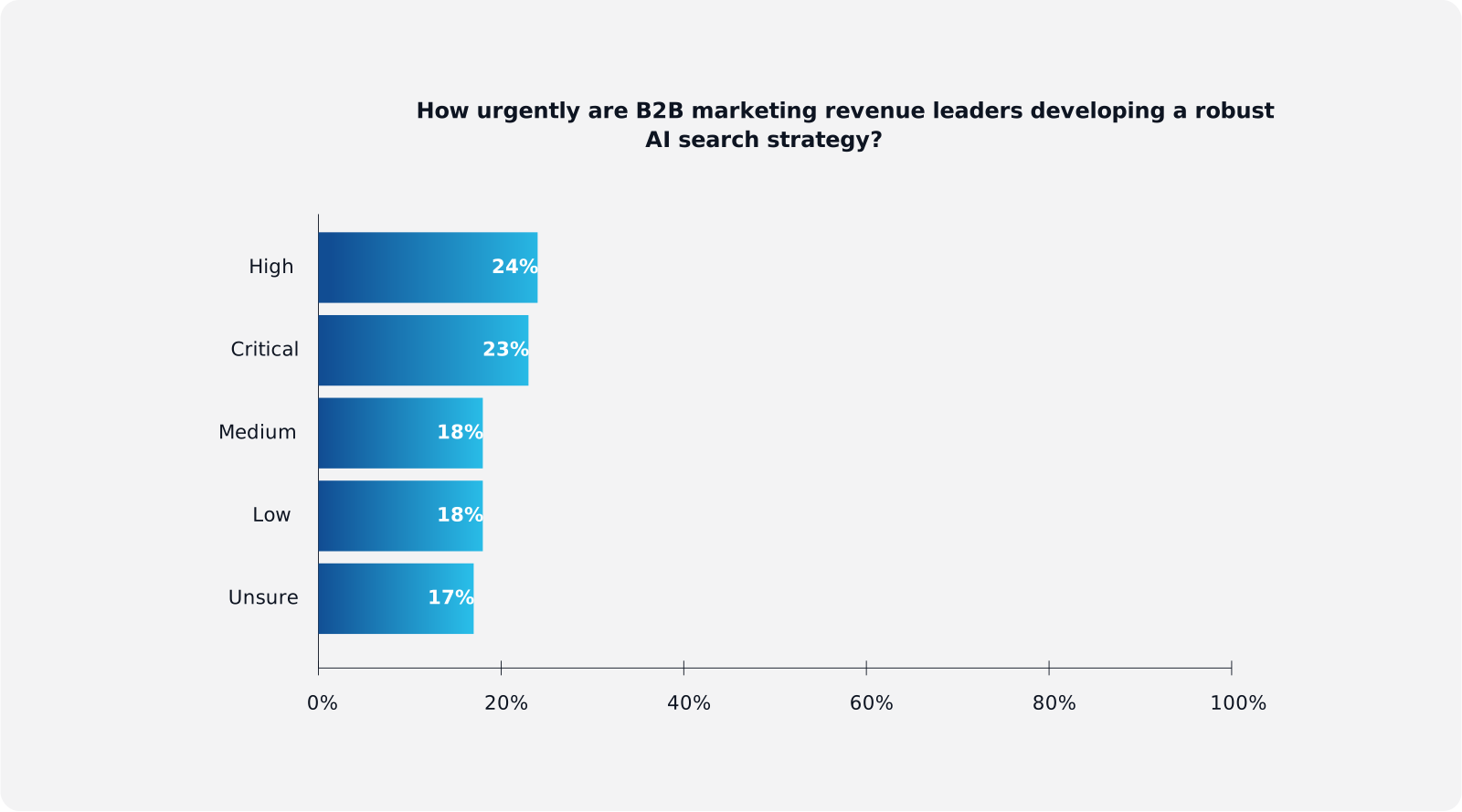
B2B marketing revenue leaders are increasingly recognising the strategic importance of AI search, although levels still vary across our audience. Nearly a quarter (24%) described developing an AI search strategy as a high priority competing with other business goals, while 23% said it is now a critical top-three marketing priority for the next 12 months.
For another 18%, AI search is on their roadmap but not yet immediate, while a further 18% do not currently see it as a near-term commercial priority. Meanwhile, 17% remain unsure and feel they need more information before making a decision.
The growing focus mirrors a broader shift in digital discovery, as generative AI increasingly shapes buyer research and purchasing decisions. For many organisations, strengthening AI visibility is becoming less about ranking documents and more about ensuring brands appear directly within AI-generated answers.
What describes B2B marketing revenue leaders' organisations' AI search optimisation strategy?
55% of B2B marketing revenue leaders’ organisations are aware of GEO but have not yet started implementing a strategy, but 34% argue that this is not the case for them, and a further 8% disagree that they're still relying on traditional SEO with no GEO-specific work approach
Approaches to GEO strategies are varied:
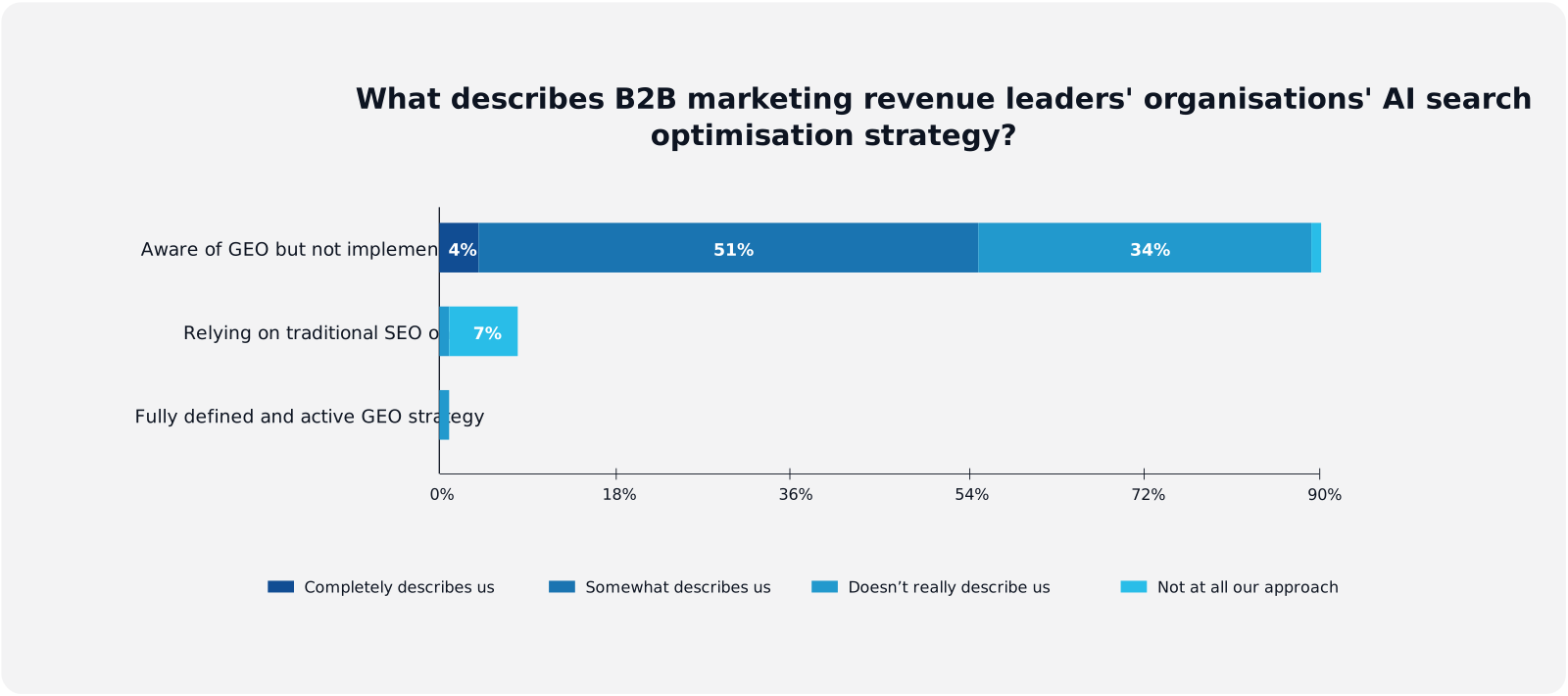
Our research indicates that many B2B marketing revenue leaders are still in the early stages of developing AI search engine optimisation strategies. More than half (51%) feel the statement “we are aware of GEO but haven’t started it yet” somewhat describes their organisation, while for 4%, it completely explains their current position. At the same time, 34% felt the statement did not really apply to them, and for 1%, it does not correlate with their approach at all.
Traditional SEO alone appears to be becoming less common, with only 1% saying reliance on SEO without GEO-specific work doesn’t really describe their organisation, and 7% saying it is not at all their approach. Meanwhile, just 1% indicated that having a fully defined and active GEO strategy does not really sum up where they are today, reinforcing how quickly AI search optimisation is entering mainstream B2B marketing discussions.
How much of their marketing budget do B2B marketing revenue leaders allocate to AI search visibility?
63% of B2B marketing revenue leaders have a dedicated budget for activities specifically designed to improve their visibility in AI search, 29% are planning to allocate budget to GEO in the next 12 months, 4% are funding AI search from existing SEO budgets, and 4% have no budget currently allocated
Not everyone is budgeting specifically for AI search visibility:
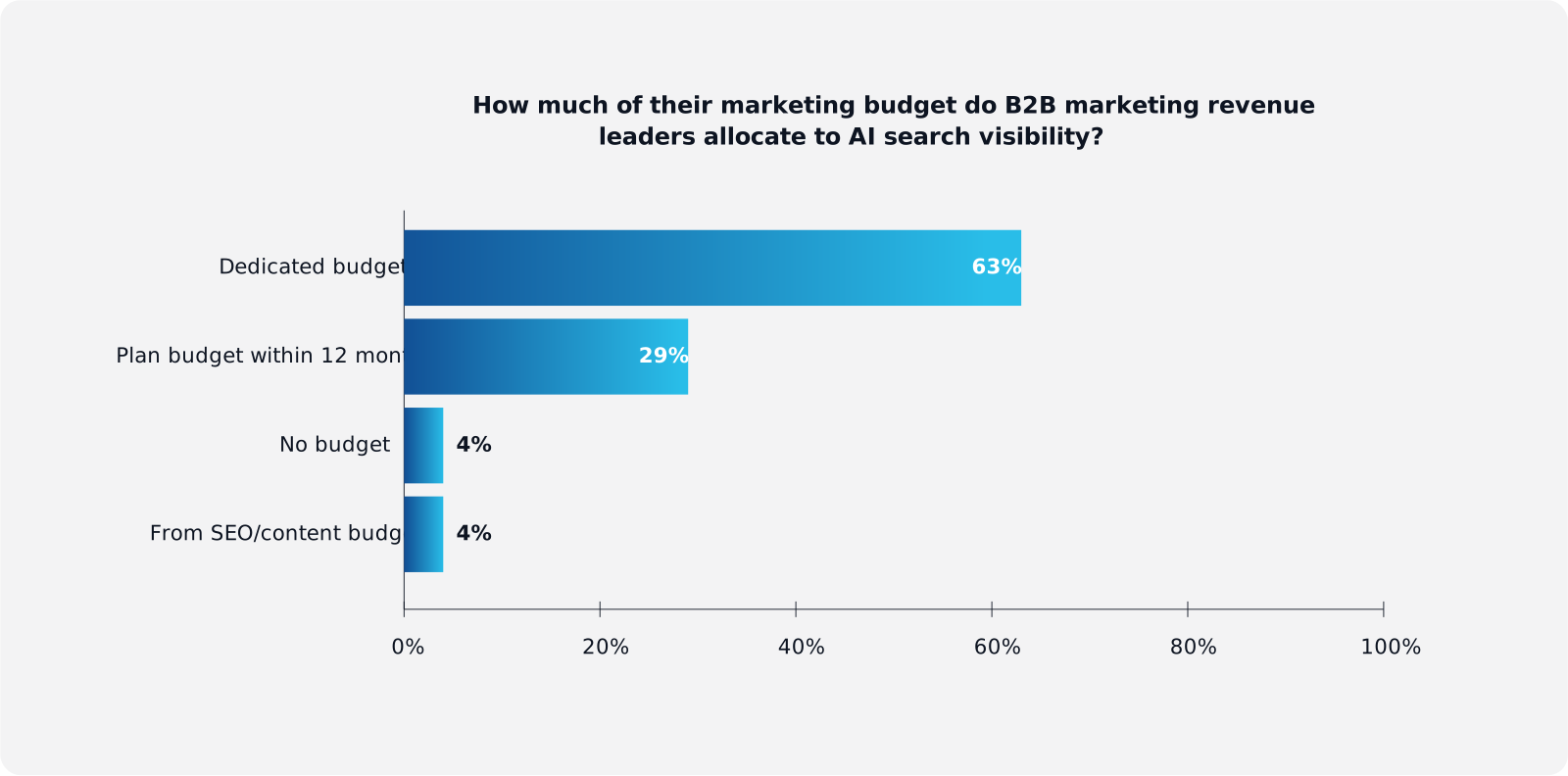
Investment in AI search visibility is becoming increasingly mainstream among B2B marketing revenue leaders. 63%’s organisations already have a dedicated budget for AI search visibility activities, signalling growing confidence in the commercial importance of AI-driven discovery. Another 29% plan to allocate budget within the next 12 months, suggesting momentum is still building across the sector.
Only 4% have no budget currently allocated to AI search visibility, while another 4% are funding these efforts through existing SEO and content marketing budgets rather than creating separate investment lines.
What these results show is the broader industry shift towards AI-focused marketing investment. Recent research from Gartner found that CMOs now allocate an average of 15.3% of marketing budgets to AI initiatives, although less than a third of organisations feel fully prepared to effectively scale those capabilities.
How are B2B marketing revenue leaders using AI tools in their marketing?
36% of B2B marketing revenue leaders are not currently using AI tools in marketing, 7% are using them for competitive intelligence, 5% for content creation and copywriting, and 2% for SEO and keyword research; however, 49% are using AI tools for other marketing purposes beyond these
AI tools are being used extensively across marketing functions:
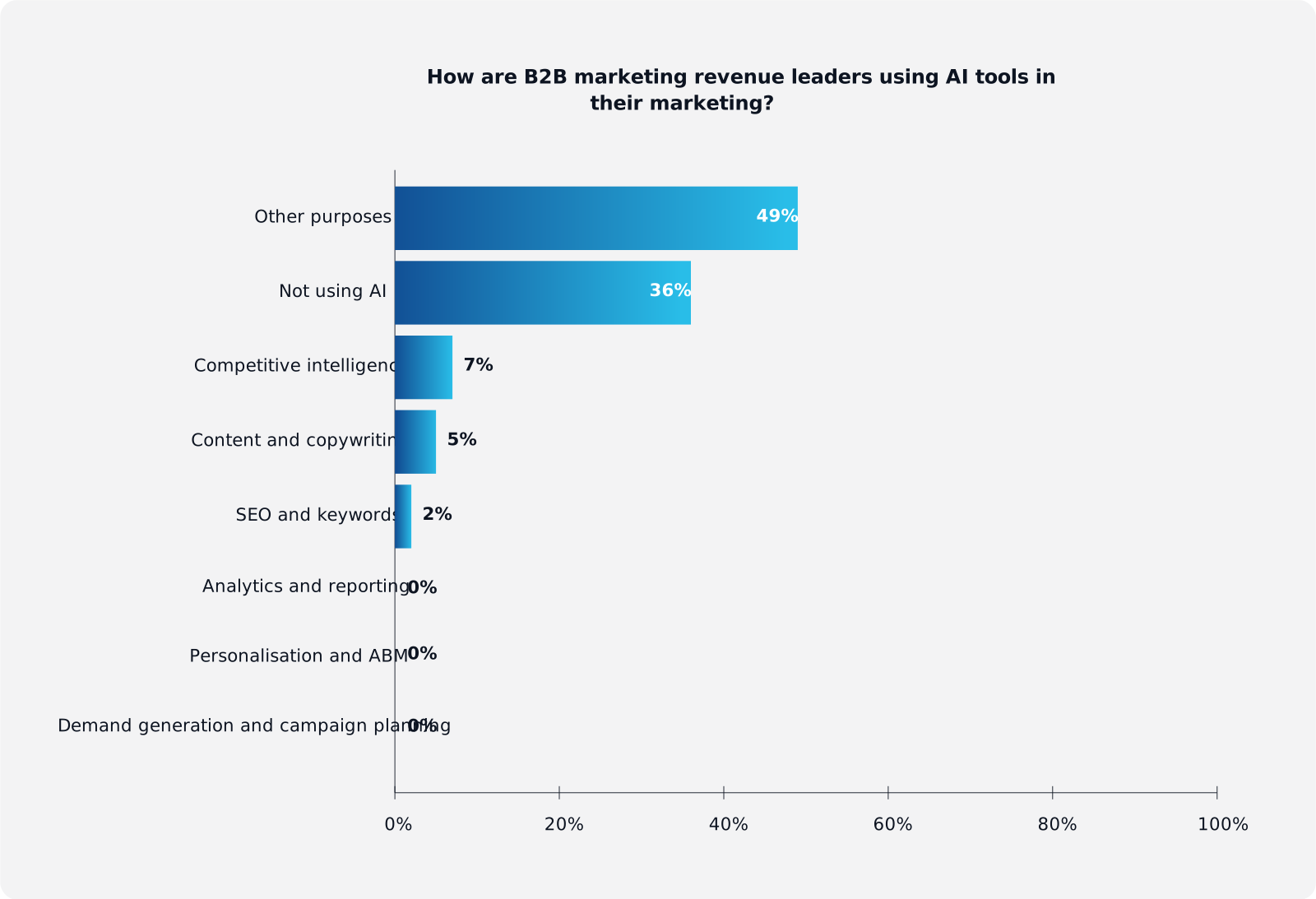
AI adoption within B2B marketing functions is still evolving, with many organisations exploring different use cases as buyer behaviour rapidly changes. However, 49% of our audience currently uses AI tools for other purposes other than those mentioned, suggesting experimentation is happening across a wide range of activities beyond traditional categories. Meanwhile, 36% are not yet using AI tools in marketing at all.
Among more established use cases, 7% are using AI for competitive intelligence, 5% for content creation and copywriting, and 2% for SEO and keyword research. No organisations are currently using AI for analytics and reporting (0%), personalisation and ABM (0%), or demand generation and campaign planning (0%). This shows a broader shift in B2B customer journeys, as buyers increasingly turn to AI tools earlier in research and decision-making processes.
How do B2B marketing revenue leaders measure AI search influence on pipeline and revenue?
56% of B2B marketing revenue leaders currently measure the influence of AI search on their pipeline and revenue using specific metrics and dashboards for AI search attribution, 3% track organic search broadly but not AI search specifically, and 41% are in the process of building the capability to measure the impact
Monitoring of AI search influence is on the rise:
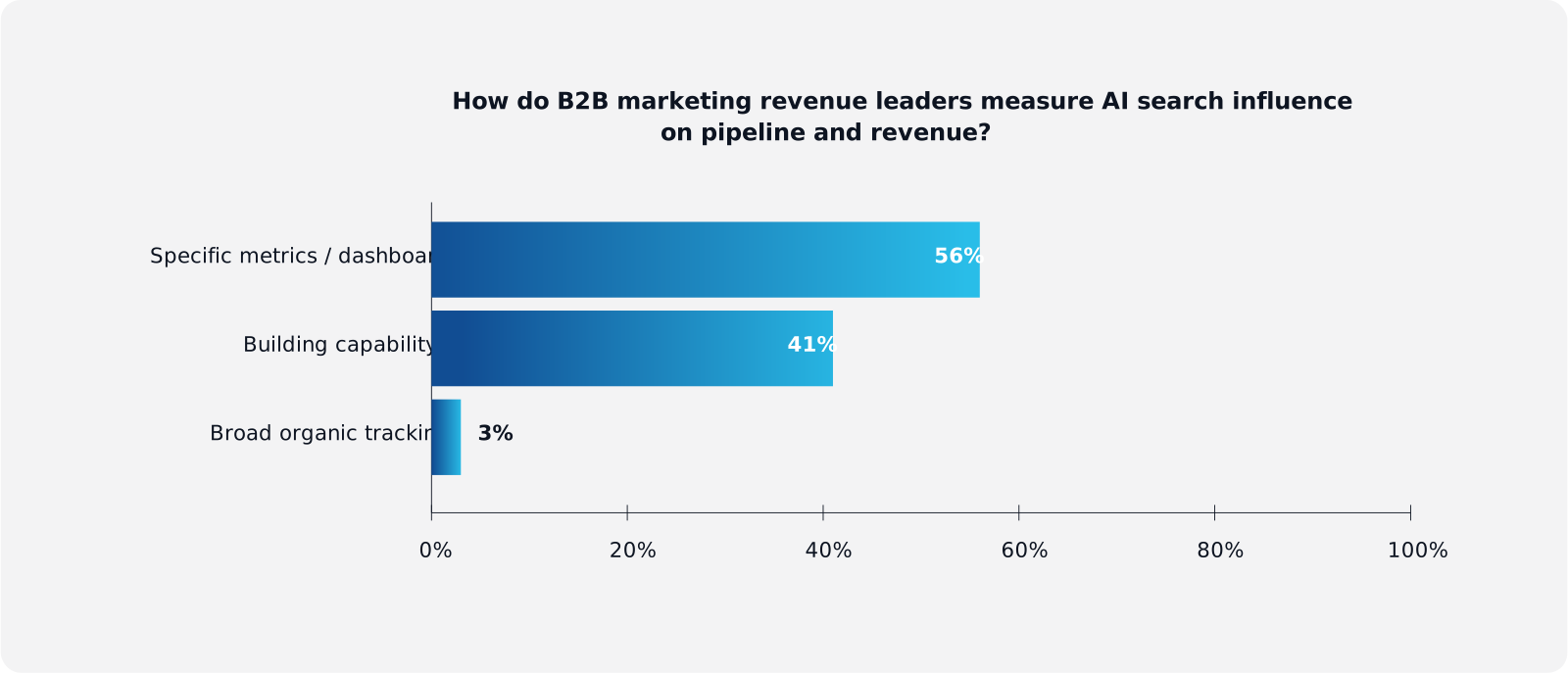
B2B marketing revenue leaders are increasingly taking a more structured approach to measuring the commercial impact of AI search. 56%’s organisations already have dedicated metrics and dashboards in place to track AI search attribution and its influence on pipeline and revenue performance.
Another 41% are currently building this capability, suggesting that AI attribution is quickly becoming a strategic priority across this sector. Only 3% still track organic search performance broadly without isolating AI search specifically.
What we can deduce from this information is that many organisations are moving beyond experimentation and beginning to treat AI visibility as a measurable revenue driver. As AI-powered discovery tools become more influential throughout the B2B buyer journey, the ability to connect search visibility to pipeline performance is likely to become an increasingly important competitive advantage.
What is the biggest AI search buyer journey challenge for B2B marketing revenue leaders?
Keeping up with rapidly changing AI search behaviours is a challenge for 38% of B2B marketing revenue leaders in an AI search-first environment, 11% battle to understand how AI tools represent their brand or category, another 11% struggle to measure the ROI of AI search-focused content, and 11% have other AI-search-related challenges
AI search buyer journey challenges are experienced in different ways:
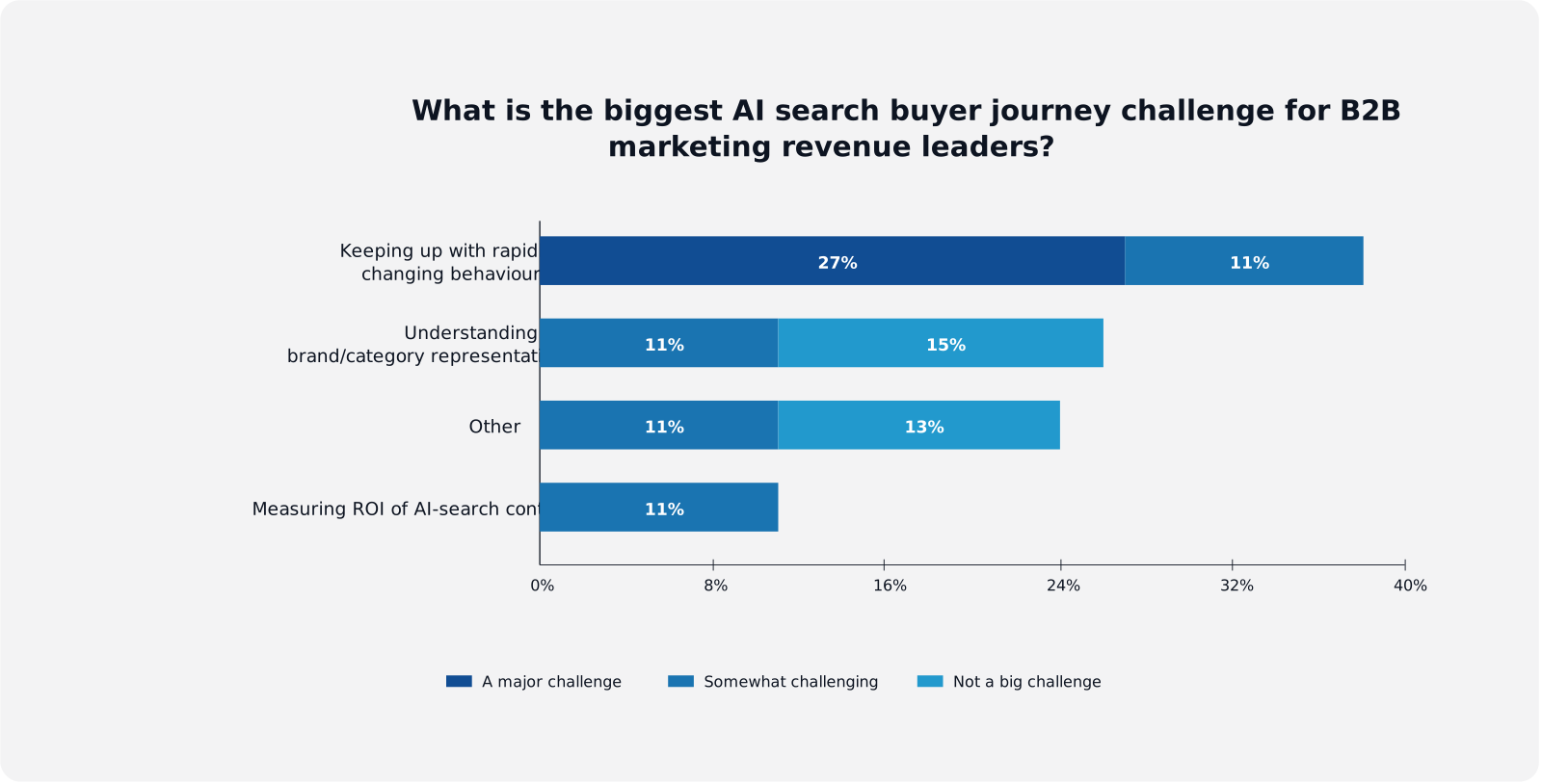
The pace of change in AI-powered discovery is creating both opportunity and complexity for B2B marketing revenue leaders. Keeping up with rapidly evolving AI search behaviours emerged as the biggest concern, with 27% of our audience citing it as a major challenge and another 11% calling it somewhat challenging.
Understanding how AI tools represent brands and categories was viewed as somewhat challenging by 11%, while for 15%, it is not currently a major issue for their organisation.
Other AI-related challenges were considered somewhat challenging by 11% and not a big challenge by 13%. Meanwhile, 11% identified measuring the ROI of AI search-focused content as a key difficulty.
This concern reinforces the speed at which AI technology is advancing, with experts suggesting AI capabilities are moving at an accelerating rate, making long-term measurement and adaptation increasingly complex for businesses.
What helps B2B marketing revenue leaders' organisations improve AI-driven buyer journey performance?
Having better tools to monitor AI search brand representation would help 83% of B2B marketing revenue leaders’ organisations improve their performance in AI-driven buyer journeys, and a clear framework for AI search optimisation would help 18%
Better tools top the list for improving AI performance:
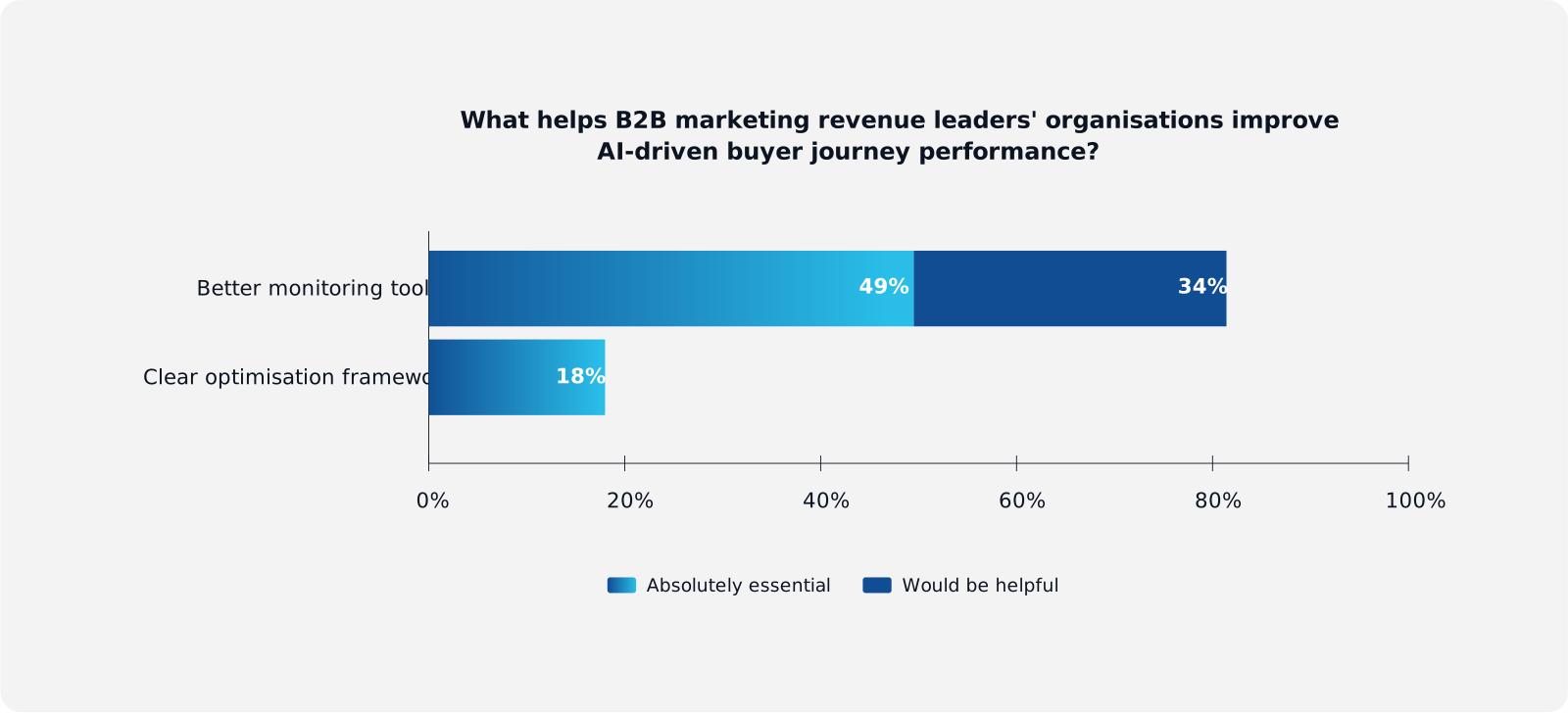
B2B marketing revenue leaders are placing growing importance on visibility and control within AI-driven buyer journeys. 49% agree that better tools to monitor how AI search platforms represent their brand are now absolutely essential, while a further 34% state that such tools would be helpful in improving performance.
The demand indicates how brands are discovered online, as AI-generated answers increasingly shape early-stage research, comparisons, and purchasing decisions. For many organisations, understanding how AI tools interpret products, services, and market positioning is becoming a crucial part of protecting visibility and maintaining competitive relevance.
Alongside monitoring capabilities, 18% of our audience said having a clearer framework for AI search optimisation would be absolutely essential. This suggests businesses are looking not only for better data but also for clearer strategic guidance as AI search continues to evolve.
Are B2B marketing revenue leaders confident adapting marketing strategies as AI search evolves?
77% of B2B marketing revenue leaders are not confident in their organisation's ability to adapt marketing strategies to remain visible and competitive as AI search continues to evolve, but 17% are fairly confident, and 4% are very confident, while 3% are unaware of their position
Confidence levels in adaptability are low:
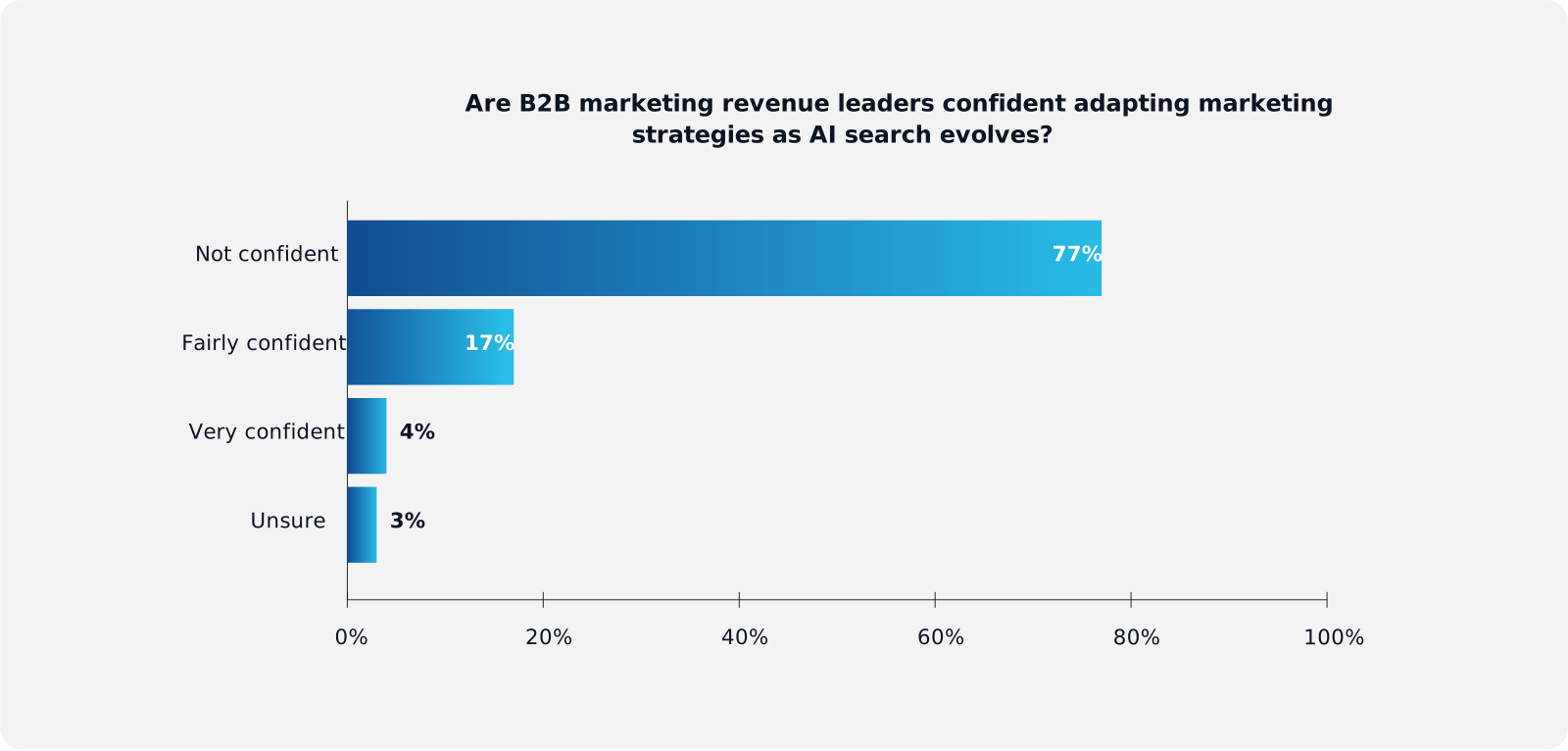
Confidence levels in adapting to AI-driven search remain mixed among B2B marketing revenue leaders, revealing both the urgency and the opportunity in the market. The largest share (44%) are not very confident and feel their organisations are already falling behind as AI evolves. A further 33% are not confident at all and believe the shift represents a significant risk to future growth.
At the same time, 17% are fairly confident and believe they are keeping pace with changing buyer behaviour and AI-driven discovery trends. A smaller group of 4% are very confident and see their organisations as ahead of the curve, while 3% remain neutral and unsure of their current position.
These opinions suggest that AI search is becoming an increasingly important strategic consideration for businesses seeking to remain visible and competitive online.
What do B2B marketing revenue leaders expect from their organisation's investment in AI search strategy?
Just 3% of B2B marketing revenue leaders think that it’s somewhat likely their organisation’s investment in AI search strategy will stay roughly the same compared to the 24% who feel this is unlikely, 21% think investment will increase by more than 25%, 4% think there will be a 10-25% increase, and 14% think there will be a decrease, while 22% have no current investment to grow from
Expectations over investment in AI search strategy fluctuate:
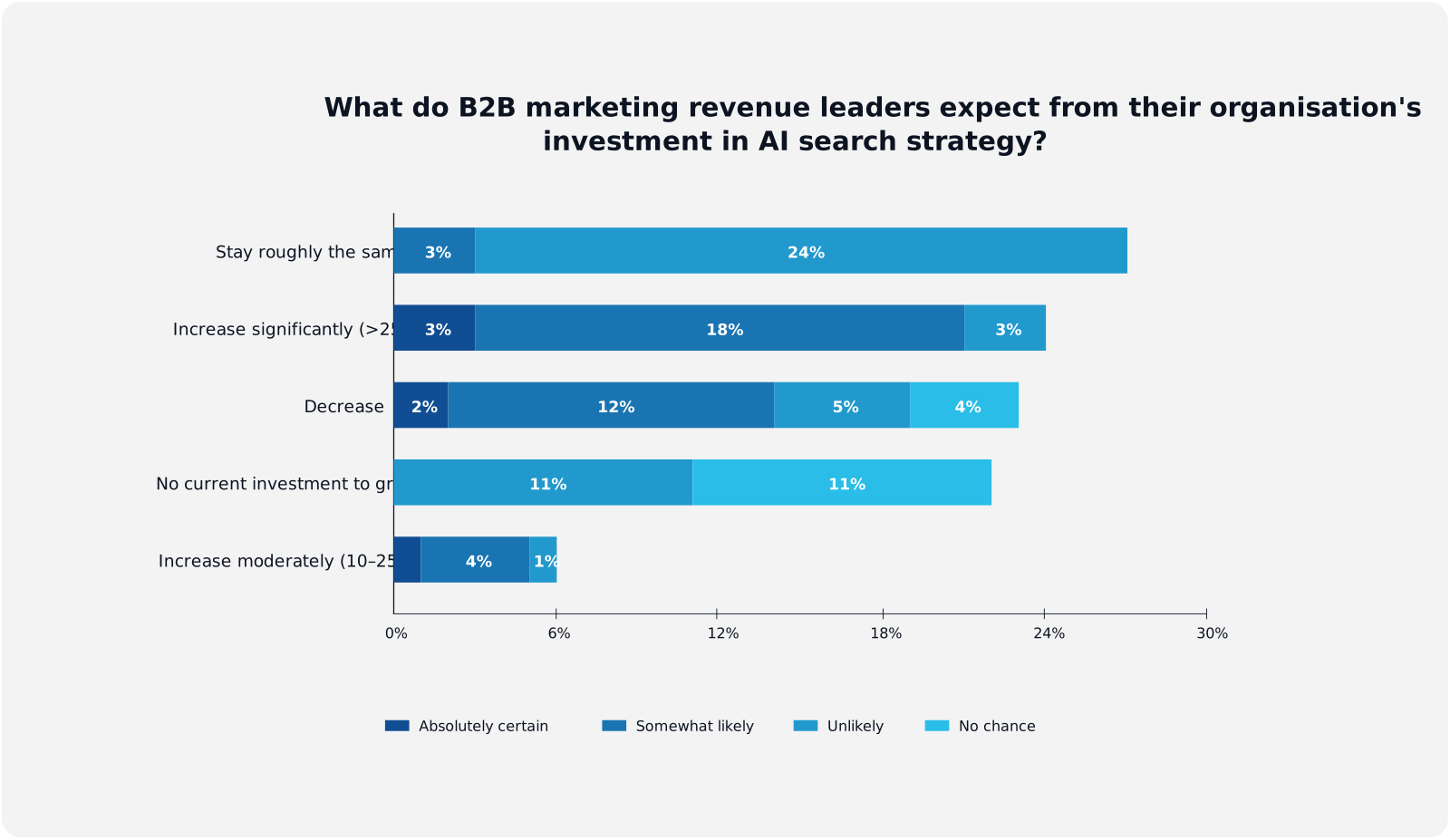
Our audience signals a cautious but growing approach to AI search investment. While 24% think that their organisation’s investment will stay roughly the same and are unlikely to increase spending, another 3% are somewhat likely to maintain current levels. Growth remains on the agenda, with 18% somewhat likely to increase investment significantly by more than 25%, alongside 3% who are absolutely certain they will and 3% who are unlikely to do so.
Moderate growth is also expected, with approximately 1% absolutely certain of a 10-25% increase, 4% somewhat likely, and 1% unlikely. Meanwhile, 12% are somewhat likely to decrease investment, 2% are absolutely certain, 5% are unlikely, and 4% see no chance. Another 11% are unlikely to invest because they have no AI search budget, while 11% say there is no chance.
Deloitte’s 2025 survey emphasises this broader industry momentum; it found that 85% of organisations increased investment in the past year and 91% plan to continue doing so, underscoring sustained confidence in AI-driven transformation.
How long is the typical B2B sales cycle for marketing revenue leaders?
For 33% of B2B marketing revenue leaders, the typical sales cycle is less than a month, for 31%, cycles are 6-12 months, 29% have sales cycles of typically 1-3 months, and 4% 3-6 months, but 3%’s typical sales cycle is over 12 months
Typical sales cycles are shorter rather than longer:
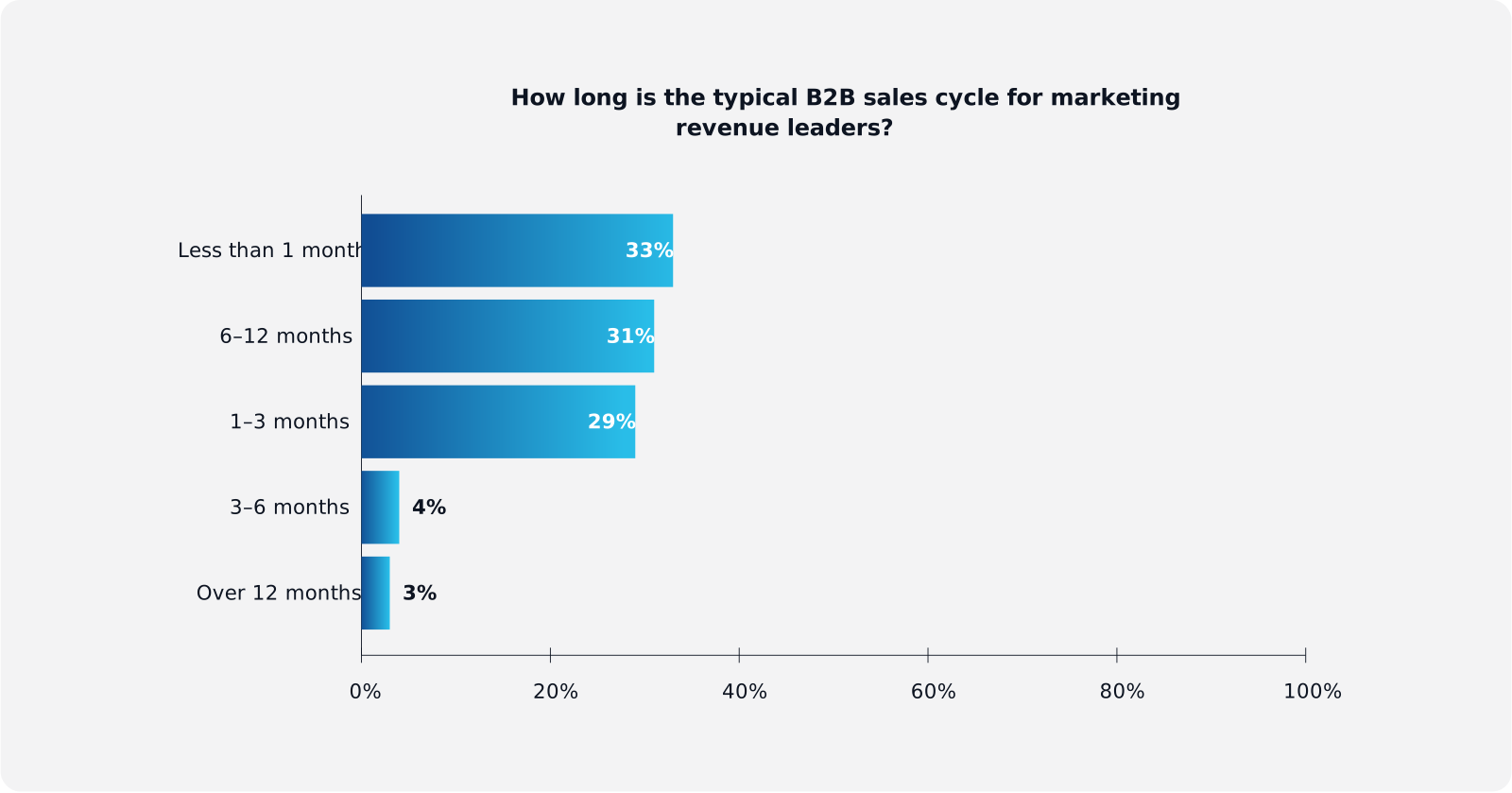
B2B sales cycles vary considerably across marketing revenue leaders, reflecting the different levels of complexity in modern purchasing decisions. 33% of our audience reported sales cycles lasting less than one month, suggesting that many organisations move quickly from interest to conversion.
Another 29% typically close deals within one to three months, highlighting steady momentum across a significant share of the market. Longer-term decision-making also remains common, with 31%’s sales cycles extending between six and 12 months.
Comparatively fewer businesses operate in the middle ground, with just 4% reporting sales cycles of three to six months. At the longest end of the spectrum, 3% say their typical B2B sales cycle lasts more than 12 months.
What are B2B marketing revenue leaders' organisations' annual marketing budgets?
30% of B2B marketing revenue leaders have a marketing budget of £5-£10 million, 17% a budget of £1-£ 5 million. 12% £500k-£1 million and 1% under £500k
Budgets tend to be on the higher side:
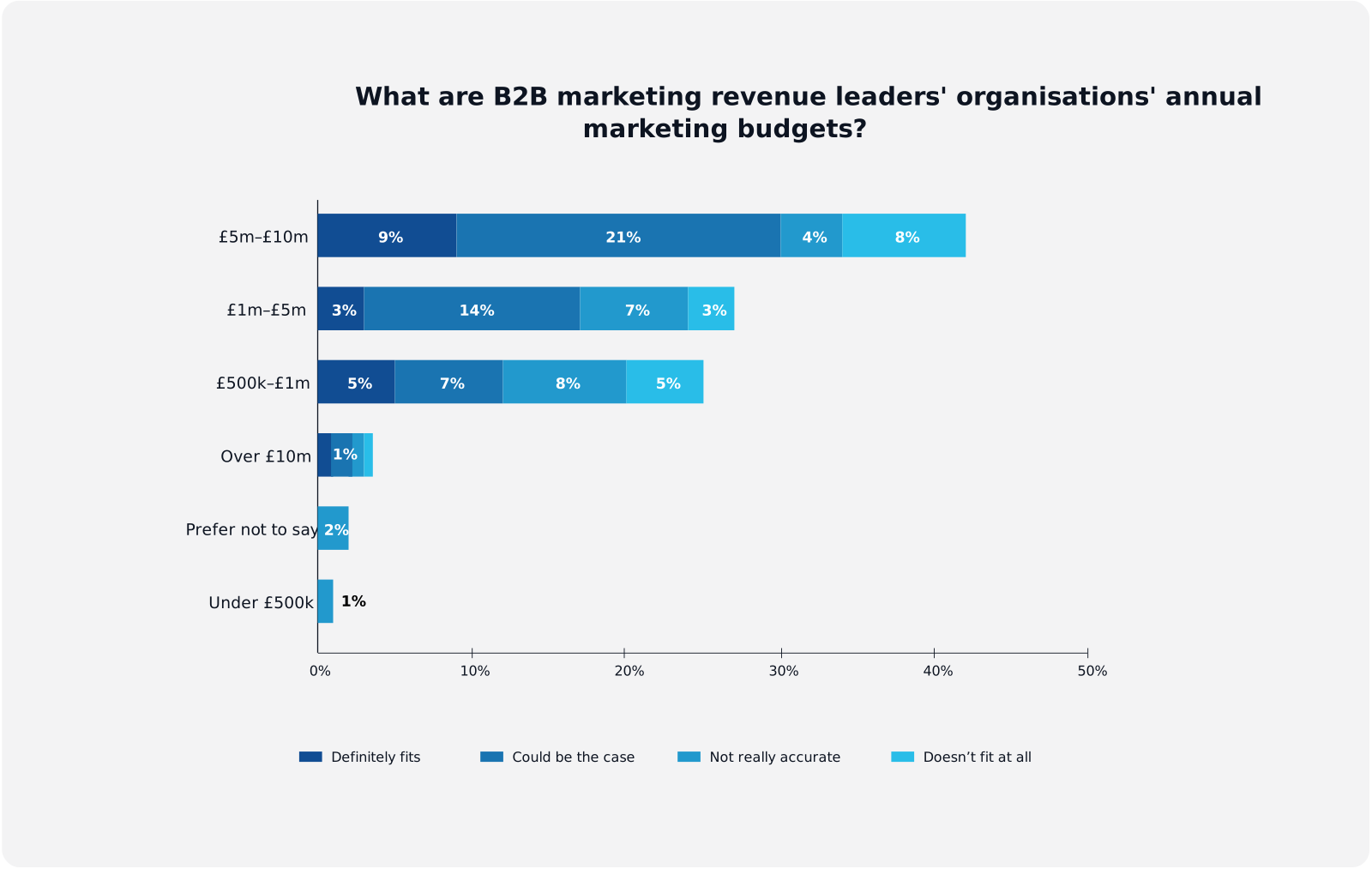
Annual marketing budgets among B2B marketing revenue leaders span a broad range, which is seen in the varying scale of priorities of organisations navigating today’s buyer journeys. The strongest concentration sits within the £5m-£10m bracket, where the figure definitely fits for 9%, 21% believe it could be the case, 4% feel it is not really accurate, and 8% say it does not fit at all.
Budgets between £1m and £5m also feature prominently, with 3% saying this definitely fits, 14% suggesting it could be the case, 7% calling it not really accurate, and 3% saying it does not fit at all.
Smaller allocations remain part of the picture: 5% say budgets of £500k-£1m definitely fit, 7% say they could apply, 8% view them as not really accurate, and 5% reject the range entirely.
At the top end, more that 1% point to budgets above £10m across every category, while 2% prefer not to say. 1% agree that budgets under £500k are not really accurate.
This is broadly consistent with industry benchmarks, where research from Forrester notes that the average B2B firm invests around 8% of revenue in marketing, reinforcing the scale of the ongoing commitment to demand generation and buyer engagement.
What is the primary job title of B2B marketing revenue leaders?
37% of B2B marketing revenue leaders’ primary job title is marketing director, and 1% are Chief Marketing Officers; however, 62% fall into other roles
Primary roles differ across our audience:
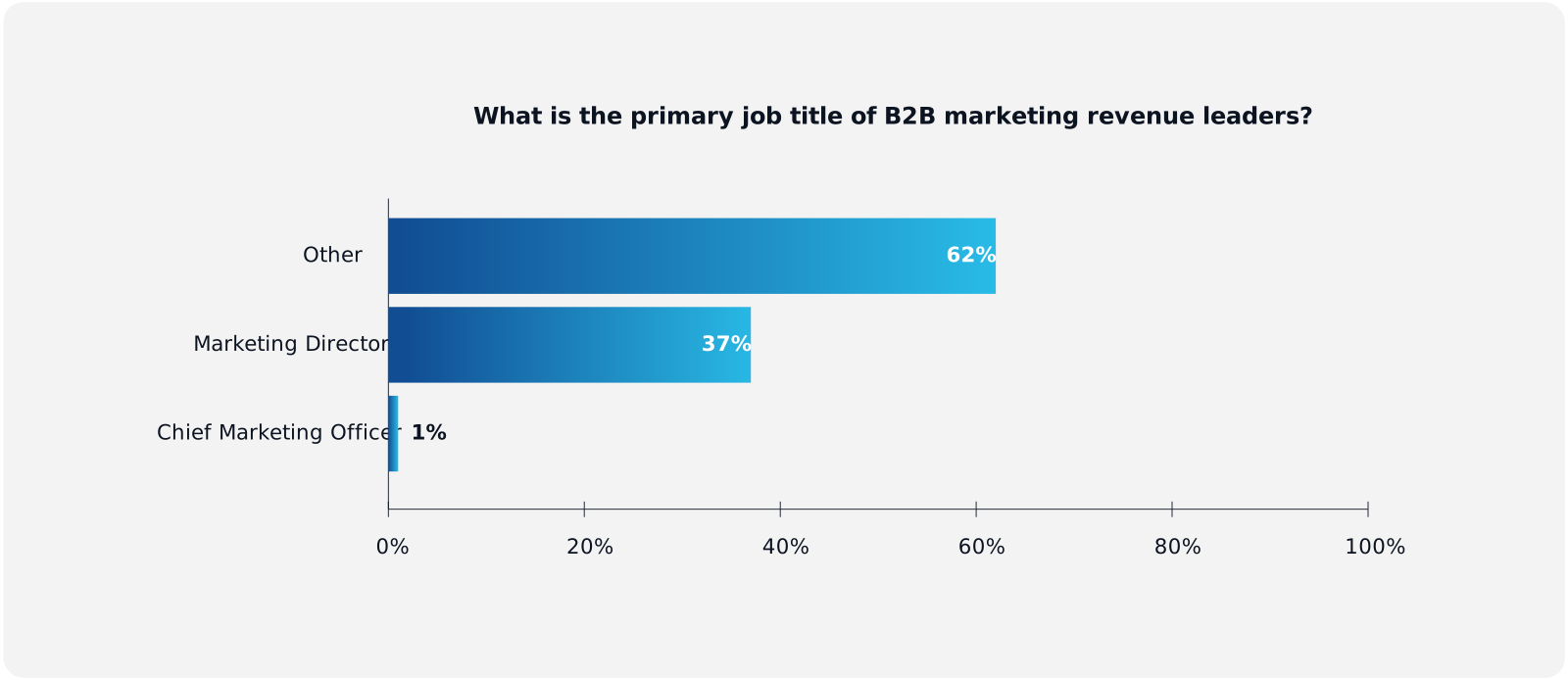
Almost two-thirds of our audience (62%) falls under “Other” roles, suggesting that AI strategy is being shaped by a broad mix of commercial, digital, and revenue-focused leadership positions beyond traditional marketing titles. This indicates a responsibility for AI-driven buyer journeys is increasingly distributed across organisations rather than concentrated in a single role.
Marketing directors make up 37% and constitute a significant group directly responsible for shaping day-to-day marketing strategy, execution, and performance. Only 1% are chief marketing officers, which may indicate flatter reporting structures in many organisations or the fact that AI search initiatives are still emerging at senior leadership level.
In the context of primary job titles, this spread shows how AI search is becoming a cross-functional priority across multiple leadership levels.
What sector do B2B marketing revenue leaders' organisations operate in?
54% of B2B marketing revenue leaders’ organisations operate in the financial services sector, 6% in professional services, 5% in healthcare and life sciences,3% in manufacturing and industrial, and 23% are in other sectors
The majority of our audience is in the financial sector:
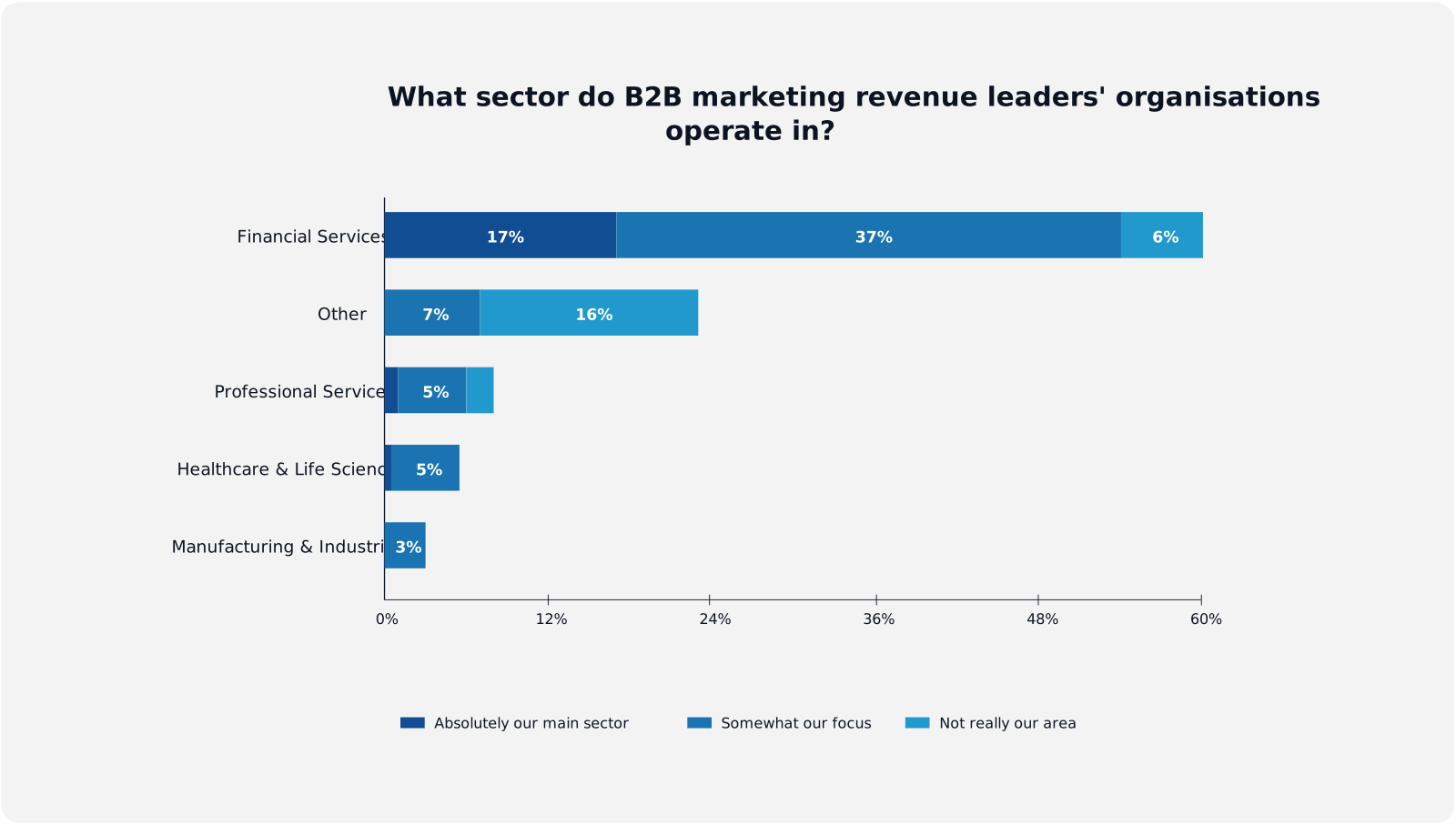
Financial services stand out as the leading sector among B2B marketing revenue leaders. For 17%, this is absolutely their organisation’s main sector; for 37%, it’s somewhat of a focus; and for 6%, it’s not really their area.
This strong representation points to the growing role AI is playing in scaling engagement strategies, particularly as financial services brands continue increasing their use of AI-generated content and personalised digital experiences. Research shows that financial services firms have seen a 4.6x increase in the volume of AI-generated content, with AI also enabling easier repurposing of personalised content across content hubs.
Other sectors also contribute to the wider B2B landscape. In the “other” category are 7%, with this being somewhat their focus, while for 16%, it’s not really their area. Professional services sees 1% as identifying it as their main sector, for 5% it's somewhat their focus, and 2% viewing it as not really their area.
Healthcare and life sciences are a primary sector for less than 1%, and for 5%, it’s somewhat their focus. Lastly, manufacturing and industrial is somewhat of a focus for 3% of our audience. These results indicate that AI-driven buyer journeys are influencing organisations across a broad mix of industries.
How many employees do B2B marketing revenue leaders' organisations have?
52% of B2B marketing revenue leaders’ organisations have 5,000+ employees, 47% 50-200, 1% have 501-1,000 employees, and 1% have 210-500
Over half of our audience works for large enterprises:
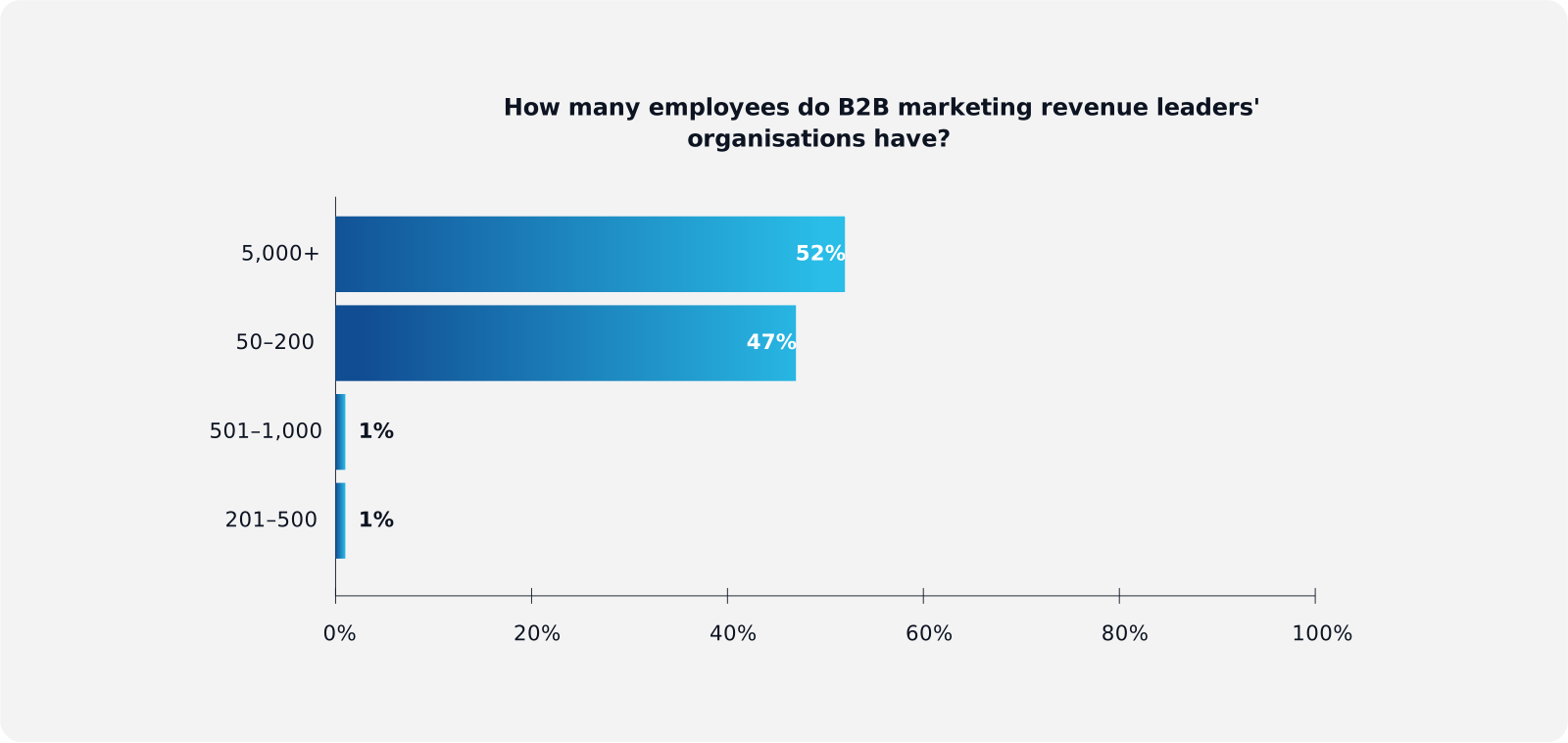
Organisation size among B2B marketing revenue leaders is largely split between major enterprises and smaller mid-sized businesses. 52%’s organisations employ more than 5,000 people, showing that there’s a strong presence of large-scale companies managing increasingly complex buyer journeys and AI-driven search strategies.
At the same time, 47% operate within organisations employing between 50 and 200 people, showing that smaller businesses are also actively shaping the future of B2B marketing and revenue growth.
Only 1% of organisations fall into the 501-1,000 employee bracket, while another 1% fall into the 201-500 employee range. The contrast between enterprise-scale companies and leaner organisations may reveal how AI search tools and digital marketing technologies are becoming accessible across businesses of very different sizes, allowing both corporations and growing firms to compete for buyer attention more effectively.
The future of B2B buyer journeys is already AI-driven
Overall, our findings show that AI-powered search is no longer just an emerging trend within B2B buyer journeys. It’s now actively reshaping how buyers research solutions, evaluate brands, and move through the decision-making process long before speaking to a sales team. While many organisations are beginning to invest in AI visibility, monitoring, and optimisation strategies, our data also highlights a significant gap between the pace of buyer behaviour change and the confidence many businesses feel in adapting to it.
As generative AI platforms continue influencing discovery, trust, and commercial decision-making, organisations that improve their visibility within AI-driven environments are likely to gain a stronger competitive advantage.
For B2B marketing revenue leaders, the challenge is not whether AI search will impact buyer journeys, but how quickly businesses can evolve their strategies to remain visible, credible, and commercially relevant.
About the data
Sourced using Artios from an independent sample of 555,973 opinions of B2B marketing revenue leaders in the UK across X, Quora, Reddit, Bluesky, TikTok, and Threads. Responses are collected within a 95% confidence interval and 5% margin of error. Results are derived from what people describe online, from opinions expressed, and not actual questions answered by people in the sample.

Send to your email
Enter your email below and a link to download the PDF of this article will be sent directly to your inbox.